The plans for the longest high-speed bicycle route through the German capital Berlin are taking shape. On 6 April authorities in Berlin revealed their plans for a new 38-kilometre-long high-speed cycle connection in the capital. The so-called “East-West Route” connects the areas of Hönow in the east to Spandau in the west of Berlin and runs right through the historic city centre. It should help promote cycling as a clean and healthy alternative to car travel.
The planned high-speed cycle route will cross six of Berlin’s urban districts, covering a catchment area of around 513,000 inhabitants. The route will be clearly marked, well lit, built with a high-quality surface and be at least 3 metres wide in each direction on most sections. In addition, cyclists will have priority at crossings and intersections over motorised traffic as much as possible.
Berlin’s State Secretary for Mobility, Dr. Meike Niedbal said: “The aim of the rapid cycle connections is to create a highly attractive offer for cyclists. Bicycle traffic should be able to move comfortably, safely and quickly here in order to be a real alternative to the car, even over longer distances. The planned east-west route offers a lot of potential for this”.
The “East-West Route” has the potential to achieve a modal shift from car to bicycle of some 6,700 people per day. This would result in a CO2 saving of around 1,000 tons per year. The route is one of several high-speed cycling routes being planned at the moment. According to the Mobility Act, Berlin is to have a total of around 100 kilometres of high-speed cycle routes by 2030.
Responsibility for improving cycling infrastructure lies with InfraVelo, a state-owned organisation charged with planning, construction, management and operation and maintenance of cycling infrastructure throughout Berlin. Gabriele Gluth, Head of infraVelo stated: “Planning and building 100 kilometres of high-speed cycle connections in urban areas with limited space is a challenge. With the “East-West Route” we show however that we can succeed in reallocating road space in favour of climate protection, safe mobility and attractive cycle paths.”
The total cost of the East-West Route is estimated at around 58 million euros. The planning documents for the western route (central to Spandau) will be submitted for the planning approval process from 2023 and for the eastern route (central to Hönow) from 2024.
For more about Berlin’s high speed cycle connections see InfraVelo’s website.
După doi ani de pandemie și activități online, a venit timpul să ne reîntâlnim și în format fizic.
O vom face marți, 17 mai, la Timișoara la un training despre cum managementul parcărilor influențează mobilitatea urbană. Trainer este Robert Pressl (Graz, Austria), expert în mobilitate urbană, cu un impresionant portofoliu în proiecte de cercetare în mobilitate și gestiunea parcărilor.
Trainingul va fi în limba engleză, cu traducere în limba română. Vom parcurge aspecte teoretice legate de managementul parcării și integrarea în sistemul de mobilitate al orașului (piste de biciclete, transport public etc.), costurile politice ale parcării, cum folosim banii obținuți din abonamente și tichete de parcare, aplicarea legii și a sancțiunilor, cum comunicăm cu cetățenii și cum îi facem să înțeleagă necesitatea regulamentelor de parcare.
Trainingul se va încheia cu o vizită pe teren, în care vom discuta cazuri concrete de reguli de parcare, direct pe teren: ce e bine și ce e mai puțin bine.
De asemenea, Primăria Municipiului Timișoara va avea o prezentare a noului regulament de parcare, recent intrat în vigoare și despre noul mod de administrare a sistemului de parcare, prin intermediul unui serviciu public care utilizează banii încasați pentru mentenanța și îmbunătățirea locurilor de parcare existente, dar și crearea de locuri de parcare noi.
Trainingul se desfășoară în cadrul proiectului CIVITAS, PARK4SUMP, despre care găsiți detalii pe https://park4sump.eu/ .
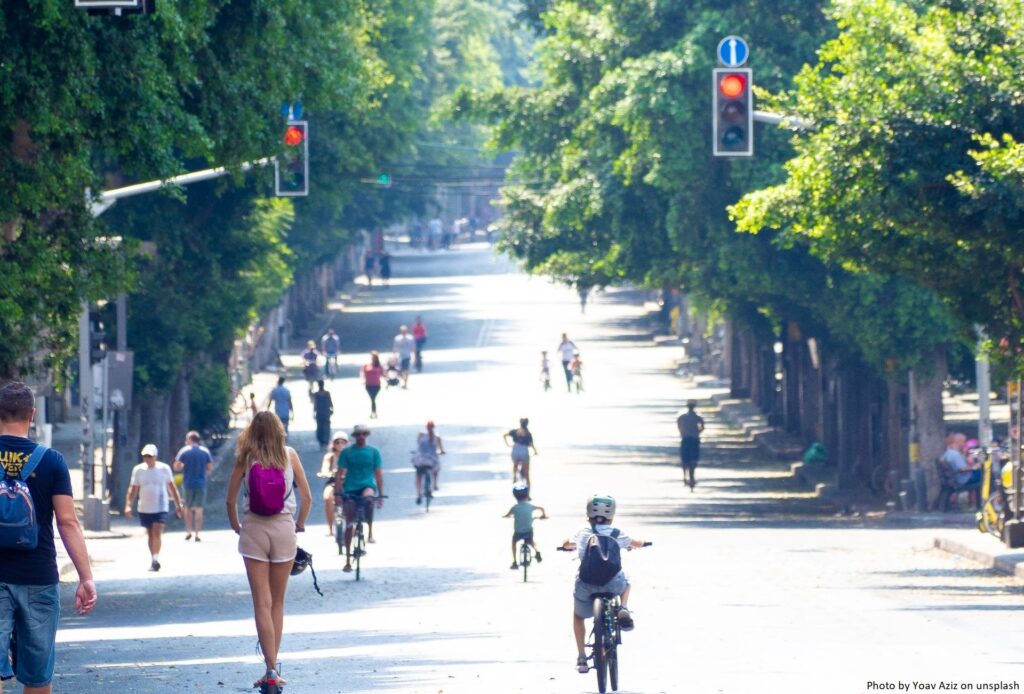
European cities are increasingly using UVAR to transition from car-centric mobility systems to more diversified, sustainable, and accessible ones. Is this shift fair, equitable and inclusive? The answer is yes – if UVARs are well-designed.
As Koos Fransen and Lucy Sadler lay out in their article in Thinking Cities, reduced car traffic leads to better air quality. This reduction benefits low-income neighbourhoods – which are disproportionally impacted by high concentrations of health-harming air pollutants; it also favours vulnerable groups (children, the elderly, people with health issues, etc.). CurieuzenAir, a citizen-led initiative in Brussels, found that nitrogen dioxide levels were the highest in the capital’s low-income areas.
If designed improperly, UVARs can impact lower-income households who live either further from the city centre or have older cars. However, these can be mitigated through targeted measuresto ensure UVARs are inclusive. For example, in Brussels, if you scrap your car, you are eligible to receive a monetary premium called Bruxell’Air that is measured according to your income. It can be spent on a range of mobility services, including public transport passes, shared vehicles, bicycles, and more.
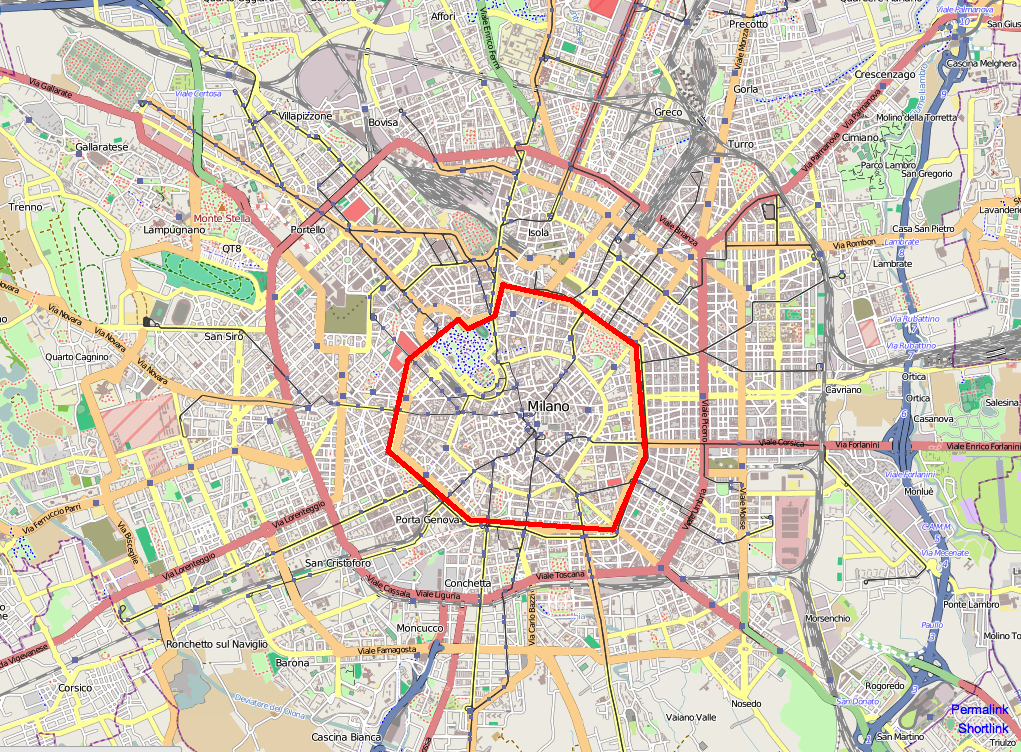
Finally, UVARs are not stand-alone policies. They are put in place by local governments in conjunction with a “package of accompanying or interlinked measures” that improve mobility for all in a cleaner, safer and more inclusive way. When Milan introduced its congestion charge scheme in 2012; the city introduced a range of complementary measures including additional public transport lines and frequencies, upgraded cycling networks, P&R facilities, and free parking for loading and unloading. To find out more, read our UVAR Guidance Mobility Concepts.
POLIS have now launched the Call for Sponsors and Exhibitors for the 2022 Annual POLIS Conference, their flagship event, taking place on 30 November and 1 December 2022 in Brussels, Belgium. Do not miss the chance to showcase your innovative solutions at one of Europe’s leading events on urban mobility in cities and regions!
As a sponsor and exhibitor, what would be in it for you?
Being a sponsor and exhibitor at the POLIS Conference entails multiple opportunities and benefits for your business, such as:
Connecting with up to 600 committed transport innovation professionals;
Becoming a strategic partner of Europe’s premier urban transport innovation conference;
Hosting a “Meet & Greet” at your booth and personalising your exchange with delegates.
Check the Sponsorship package to get all the necessary information to be a part of the upcoming POLIS Conference.
If you have any questions, please get in touch with Sebastien Nolens (snolens@polisnetwork.eu), Communications Manager at POLIS.
For further updates, check the dedicated event page.
Would you like to discuss a tailored sponsorship package? Do not hesitate to contact Julie Lucca (jlucca@polisnetwork.eu), HR and Finance Manager at POLIS.
The Interreg Central Europe project EfficienCE aims at increasing energy efficiency and renewable energy usage in public transport (PT) infrastructures to reach local, regional, and EU energy targets. EfficienCE takes up the need of improving energy-efficiency of PT infrastructures to exploit the untapped potentials in this sector. Therefore, 12 partners including 7 PT authorities/ companies from 7 different Central European countries are working together on strategies for planning, financing, and deploying energy-efficient PT infrastructures and innovative energy saving technologies, and on strengthening the capacity of the PT sector by providing knowledge resources.
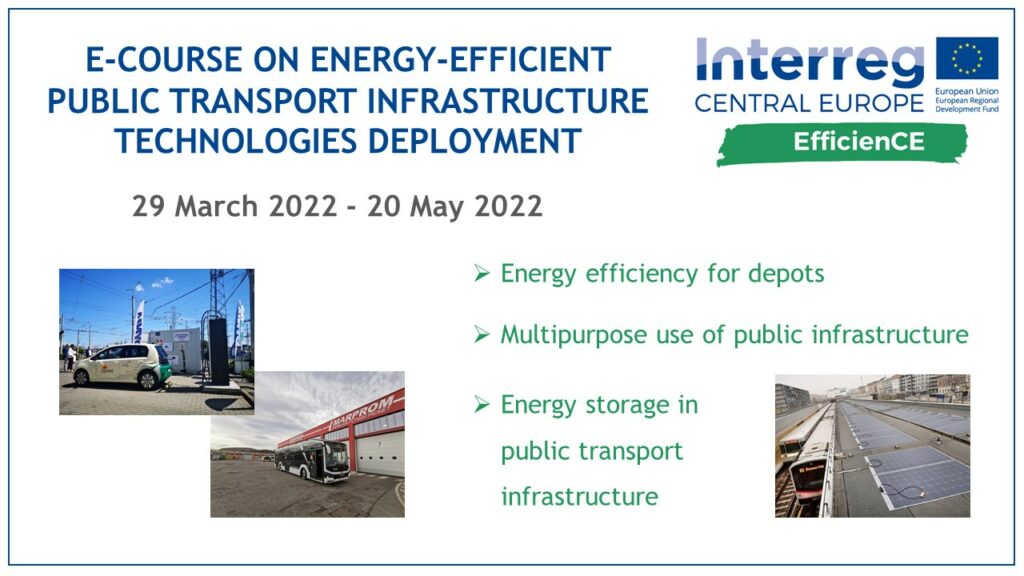
In this framework, the project is organising an online course on energy-efficient public transport infrastructure technologies deployment, aiming to enable public transport operators/ companies, as well as practitioners at public administrations, to learn about the concept and practical implications of different technologies. The participants are introduced to the overall topic, given examples of technologies and solutions available and tested in (Central) Europe, and will have access to specific use cases based on the evaluation of pilot actions deployed during the project on the main topics of the EfficienCE project: 1) energy efficiency for depots, 2) multipurpose PT infrastructure use & 3) energy storage in PT infrastructure.
The online course starting on 29 March 2022 and ending on 20 May 2022 is structured into three main components:
State of the art and successful technologies
Best practice examples inside and outside EfficienCE
As part of the Interreg EfficienCE project and its online repository tools4efficience.eu the project’s consortium is incorporating an open marketplace that fosters the exchange of new technologies and pieces of equipment.
The implementation of energy efficiency measures in public transport requires hardware and often hard-to-acquire, complex technological equipment and special solutions.
The EfficienCE marketplace aims to give an overview on niche hardware and solutions supporting planning and monitoring energy-efficient public transport infrastructure.
Therefore, we are calling to providers in the field to populate the marketplace to allow finding new technologies and pieces of equipment in and outside Central Europe. If you are interested in presenting your technologies and solutions on the EfficienCE marketplace, please contact Lisa Blondrath (l.blondrath@rupprecht-consult.eu) with the name of your company, a short description of your product(s), its application area and target groups.
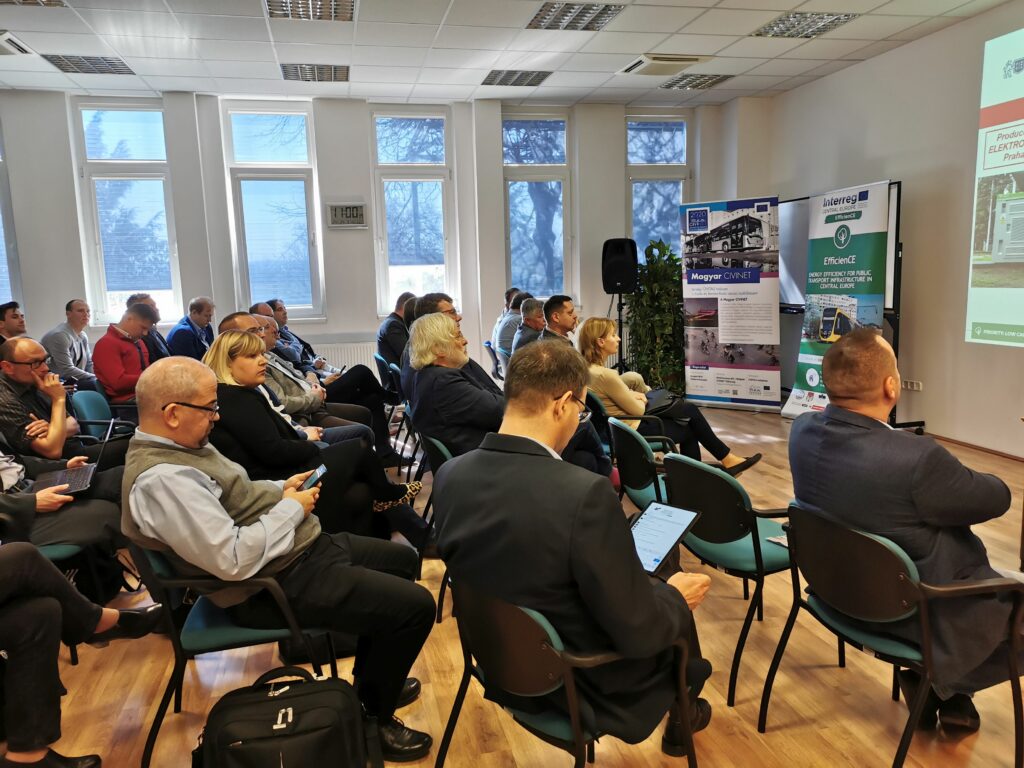
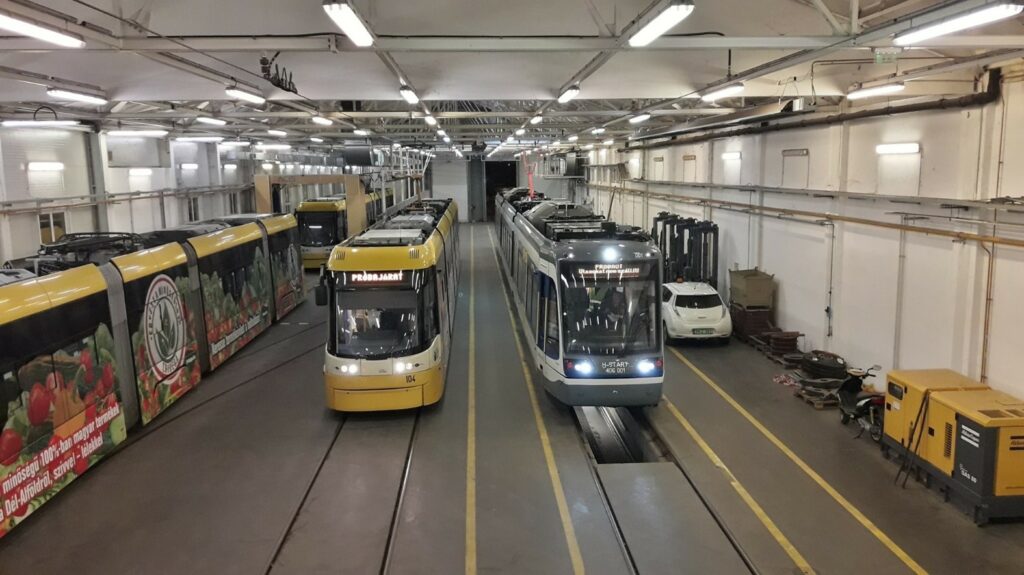
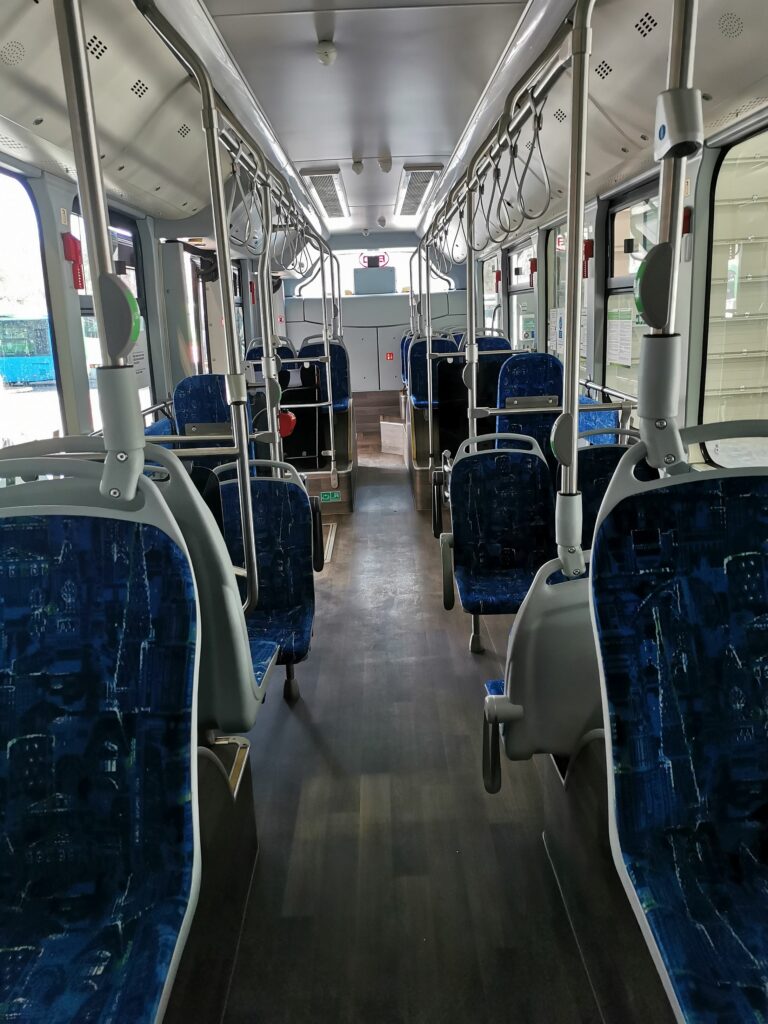
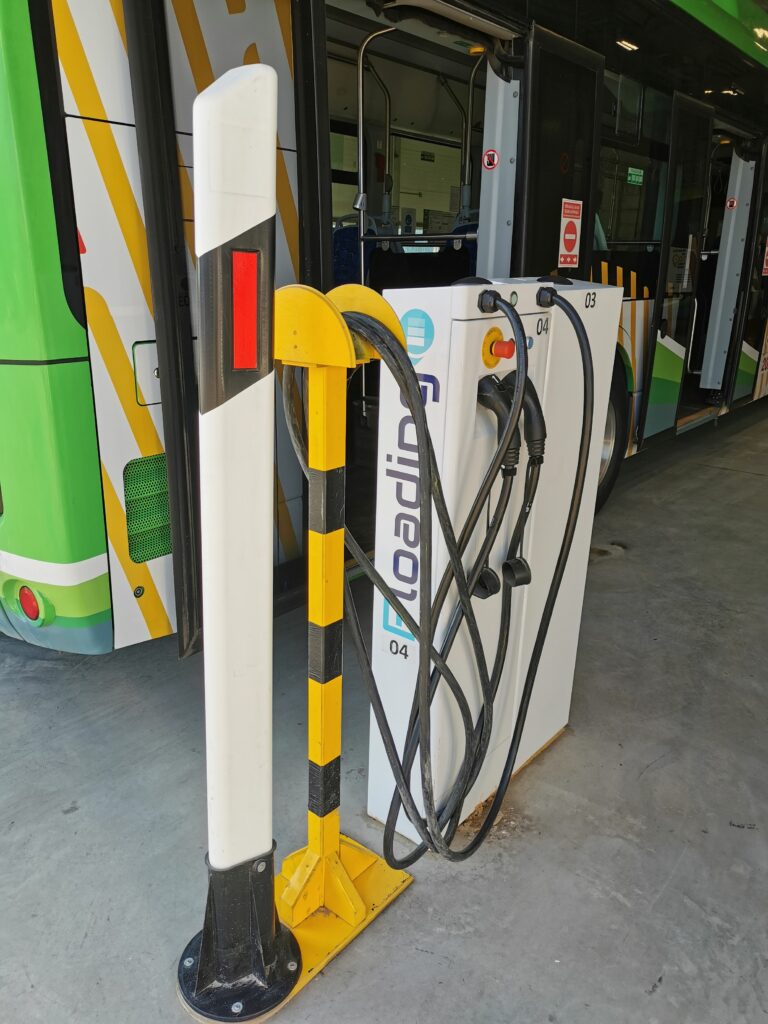
On 24 March 2022, Magyar CIVINET and the INTERREG CE EfficienCE project held a joint on-site meeting in Pécs (Hungary). The one-day event titled „The new directions in electromobility” ended with a site visit to the bus depot.
hdr
Photos: Site visit at the bus depot (Mobilissimus)
The presenters representing several Hungarian cities’ public transport operators and organizers shared their experiences with electric buses and other electric modes of transport. There were also more general topics covered as well as the experiences and further opportunities from an ongoing pilot project called Green Bus (Zöld Busz Mintaprojekt). From the transport operators’ point of view, electric mobility is both a need and a challenge in Hungary. The conclusion was that even though the use of electric mobility in public transport is an attractive choice, for a full transition a lot of knowledge, experience and even more financial source is still lacking.
Photo: Pilsen, Czechia (Karol Grzonka)
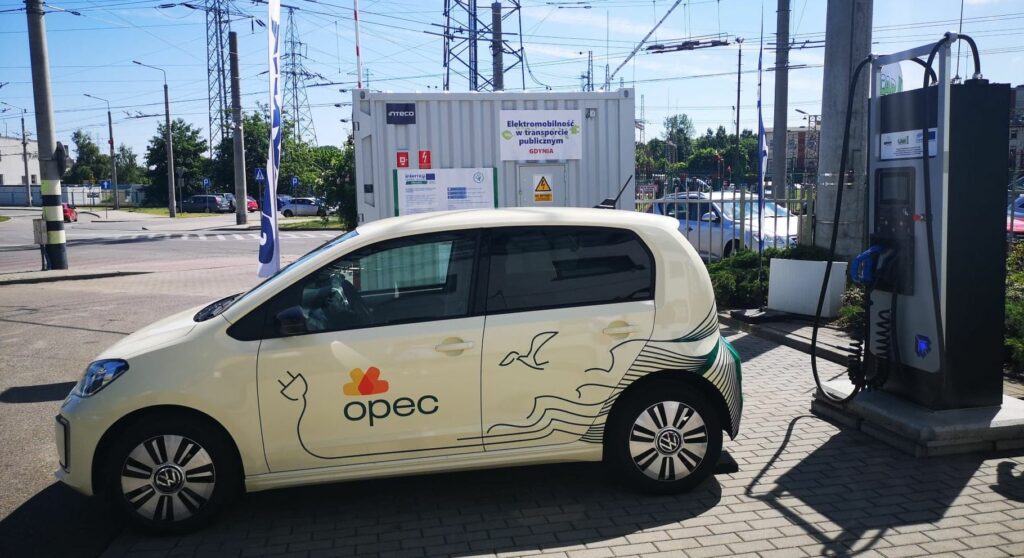
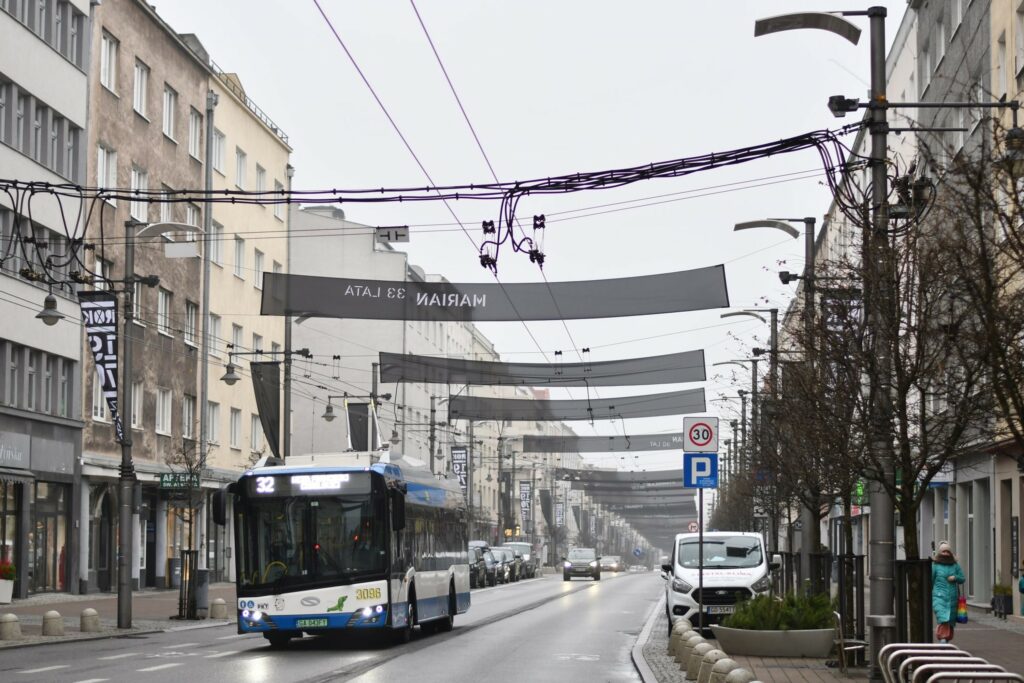
Mikolaj Bartłomiejczyk, representing the Technical University of Gdansk and the public transport operator from Gdynia (PKT) shared two international projects’ results. First, he presented the results of the operation of a battery-based buffer station supporting a selected section of trolleybus power supply systems in Pilsen (Czechia; implemented within EfficienCE), then he also showed how electric car chargers can be integrated with a traction power supply system (within the EfficienCE and INTERREG CAR projects).
2022. március 24-én újra személyesen találkoztak a Magyar CIVINET tagjai. Az elektromobilitás új irányai címet viselő szakmai találkozó a Magyar CIVINET és az INTERREG CE EfficienCE projekt közös szervezésében Pécsett valósult meg.
A teltházas eseményt Ruzsa Csaba, Pécs Megyei Jogú Város alpolgármestere és a Tüke Busz elnök-vezérigazgatója, Bánkuti István nyitották meg azzal a gondolattal, hogy nehéz lekövetni a folyamatosan növekvő, zöldítés iránti igényeket, különös tekintettel a korlátozott beszerzési lehetőségekre. A pécsi közlekedési szolgáltató cég vezetője hozzátette, hogy ugyan aktuális lenne az elektromobilitásra való szinte teljes átállás, de ennek még számos akadálya van technológiai, forrás és humán oldalról is.
Az első, bevezető előadást Erős Veronika tartotta a HUMDA képviseletében a Zöld Busz mintaprojektről, melyet egy kormányhatározat alapján hoztak létre 2019 őszén. A cél a közösségi közlekedés zöldítése hosszú távon. Ezt segítve, a projekt keretében különböző buszokat tesztelnek 25.000 főnél nagyobb városokban. Mivel a projekt már 2 éve folyik, a buszok által megtett távolság kiteszi a Föld körüli távolság másfélszeresét. Többféle gyártó járművét tesztelték különböző hőmérsékleti feltételek mellett (télen-nyáron), hogy minél több tapasztalattal gyarapodjanak. Emellett fontos szempont az is, hogy a buszok minél több városba, és azokon belül a lehető legtöbb városrészbe eljussanak. Az elektromos buszok mellett hidrogén cellás járművek is vannak a tesztbuszok között. Mindkét hajtásrendszer esetében a legnagyobb kihívást a töltés menedzsment jelenti. Hamarosan elérhető lesz az újabb pályázati kör, érdemes figyelni a honlapjukat.
A nemzetközi projektekben elért eredményeket Mikolaj Bartłomiejczyk mutatta be. Az INTERREG CE EfficienCE projekt keretében Plzenben puffertárolókat létesítettek a trolibuszüzem áramellátó hálózatához kapcsolódva. A méréseket a Gdanski Műszaki Egyetem és a plzeni közösségi közlekedés szolgáltatójának (PMDP) munkatársai készítették a trolibuszhálózaton történő feszültség esésekről és azok kompenzálásáról. Az eredmények azt mutatták, hogy a puffertároló hatékonyan képes volt ellensúlyozni a feszültség eséseket. Egy másik nemzetközi projekt keretében a Gdanski Műszaki Egyetem munkatársai által készített elemzés az elektromos autók töltési infrastruktúrájának fejlesztési lehetőségeit vizsgálja, azon belül is a városi villamosított közlekedési rendszerekkel (villamosok, trolibuszok, metró) való integrálhatóságot. A harmadik, szintén figyelemre méltó projektjük keretében az elektromos autóbuszok menet közbeni, dinamikus töltését próbálták ki Gdynia trolibusz infrastruktúrájának felhasználásával. Méréseik azt mutatták, hogy a folyamatos üzemhez elegendő töltést biztosít, ha a vonal 25%-ban trolibusz felsővezeték alatt fut.
Az eseményen számos hazai város képviselői is részt vettek. A Paksi Közlekedési Kft.-től Király István szakmai vezető beszélt a város helyzetéről és az elektromobilitási lehetőségekről. A városban 2014-re egy átlagos családnak két személygépkocsija volt már, és ezzel párhuzamosan romlott a közösségi közlekedés iránti kereslet. A városvezetés elkötelezett volt a változás mellett, de a megvalósítást komoly koncepciók és tervezési folyamatok előzték meg. 2018-ban a Közlekedéstudományi Intézet segítségével SUMP készült, illetve létrejött a Protheus projekt, amely a városi közösségi közlekedés elektromos hajtásrendszerre történő átállítására fókuszált. Új szolgáltató vette át az üzemet, új járműveket szereztek be, majd 2020-ban elindultak az elektromos buszok tesztüzemmódban. A közlekedési cég – nemzetközi projektekben való részvétel segítségével – további fejlesztéseket tervez: többek között az utastájékoztatás okosítását, okos megállóhelyek létrehozását, elektronikus jegyrendszer kialakítását.
Schulek Tibor, mint közlekedési szolgáltatásfejlesztési vezető a BKK Zrt. készülő járműstratégiájáról számolt be röviden. Mivel szinte mindegyik ágazatban (villamos, metró, autóbusz és trolibusz) a járműflotta életkora elég magas, a cél ezeknek a fiatalítása, az alacsonypadlós járművekre való teljes átállás (ez utóbbi cél az autóbusznál már szinte teljesült), a korszerűsítés, illetve a komfort növelése. Ami az elektromobilitást illeti, a budapesti közösségi közlekedési utazások majdnem kétharmada már környezetkímélő, elektromos meghajtású járművel történik. Mivel a BKK is partnerként vesz részt az EfficienCE projektben, egy akcióterv részeként energetikai és infrastrukturális elemzés készül, mely kiegészíti a készülő járműstratégiát.
Ekés András, a Mobilissimus ügyvezetője az elektromobilitás korszerű, de nem elsődlegesen ismert megoldásait mutatta be néhány nemzetközi, közösségi közlekedési példán keresztül. Bordeaux-ban a villamoshálózat 4 vonalból áll, mely 81 km hosszt tesz ki. A belvárosban és több szakaszon is APS (Alimentation par sol) rendszerrel működik, 22 méterenkénti alsó betáplálással. A nizzai villamoshálózaton 3 vonal üzemel. A 2007-ben átadott 1-es vonalon három megállót akkumulátoros üzemben tesznek meg az Alstom járművei, a pár éve elindult 2-es és 3-as vonalon pedig megállóhelyi statikus töltési rendszerben működnek, szinte kizárólag felsővezeték nélküli útvonalakkal.
Nizzában elektromos buszok is üzemelnek, melyek érdekessége, hogy OppCharge töltési rendszerrel működnek. Konzolra szerelt inverz áramszedő ereszkedik le a két végállomáson, és 5-6 perc alatt gyorstöltéssel visszatölti a járművet, így akár napi 300 km-t is megtehetnek városi forgalomban.
Prágában az új elektromos buszok idén januárban indultak el. Az újdonságuk, hogy a hagyományos mód mellett a leendő troli vonalak felsővezetékéről is tölthetők lesznek. Emellett még beszámolt a bécsi elektromos midibuszokról, a berlini elektromos buszokról és egyéb (önvezető) elektromos járművekről, melyek az e-mobilitás közösségi közlekedésbe való bevonhatóságának egyre bővülő palettáját jelentik.
A Szegedi Közlekedési Társaságtól Dr. Németh Zoltán Ádám közösségi közlekedési és vasútbiztonsági vezető adott elő. A szegedi Ikarus-Skoda trolibuszok most érik el a 8-9 éves életkort, és a legnagyobb probléma az akkumulátor, melynek cseréjét nehéz finanszírozni, és csak a gyártón keresztül szerezhető be. Az előadás második része a tram-trainről, vagyis a vasútvillamosról szólt, mely a hírekkel ellentétben már jól működik – ha vannak is még kisebb problémák. A sebességkorlátozás rövidesen feloldható lesz a vasúti szakaszon, így a kínálat tovább javítható. A tram-train műszakilag az egyik legösszetettebb projekt: hiába van rá példa más városban, nincs két egyforma megoldás. Az együttműködés az SZKT Zrt. és a MÁV-Start Zrt. között folyamatos.
Fotó: SZKT
Visszatérve Budapestre, a BKV Zrt.-től két előadót hallottunk. Horváth Ákos műszaki főmunkatárs és Sütő Zsolt járműműszaki osztályvezető a fővárosi járműoldali kihívásokat mutatták be. Az egyéni motorizációs trendekkel nehezen tud lépést tartani a járműpark, márpedig a káros hatások csökkentése nem technológiai vagy műszaki jellegű igény elsősorban, sokkal inkább a helyváltoztatási igényeket kellene csökkenteni, illetve a közösségi közlekedés szerepét növelni. Ez utóbbi a szolgáltatás színvonalának növelésével elérhető. Ami az elektromobilitás erősítését illeti, lokális összefüggésben az elektromos autóbusz bármilyen egyéb hajtásmódnál jobban teljesít. Az előnye azonban csökken, ha a globális kibocsátással együtt vizsgáljuk. További sajnálatos tény, hogy egyelőre a környezetbarát megoldások a közösségi közlekedésben is jóval drágábbak (egy elektromos autóbusz beszerzése a dízelnek közel kétszerese). Tehát hiába állnak rendelkezésre az új eszközök, a régiek univerzálisabbak, sokoldalúbbak, kompromisszummentesebbek.
A szakmai találkozót Szele András, a Mobilissimus vezető szakértőjének előadása zárta. Az előző témáktól egy kissé elrugaszkodva az elektromos meghajtású járműveknek a módváltásban játszott szerepét járta körül. Az elektromos személygépkocsik aránya Magyarországon egyelőre alacsony, de a következő évtizedben robbanásszerű növekedés várható. A módváltást tekintve a vasútra való ráhordást vizsgálta meg részletesebben. Ami a külső oldali módváltást illeti, a P+R parkolókban az elektromos autók használata egyelőre elhanyagolható, ezért a töltőállomás inkább kiegészítő szolgáltatásként, mintsem szükségletként jelenik meg. Ugyan az elektromos kerékpárok használatában még inkább növekedésre lehet számítani, de mivel nagy az értékük, nem lesz szükség töltésre itt sem, hiszen inkább magukkal viszik majd a kerékpározók, ha nincs megoldva a biztonságos tárolás. A rollerekre ugyanez jellemző. Ami a belső oldali módváltást illeti, itt sem jellemző még az elektromos autók használata, az e-rollerek esetében pedig inkább a megosztott verziók vannak jelen. Sajnos a megosztott mikromobilitás (melynek egy része már elektromos) nem igazán része még az utazási láncoknak, ezt a Mobility as a Service (MaaS) megoldások elterjedésének hiánya sem könnyíti meg.
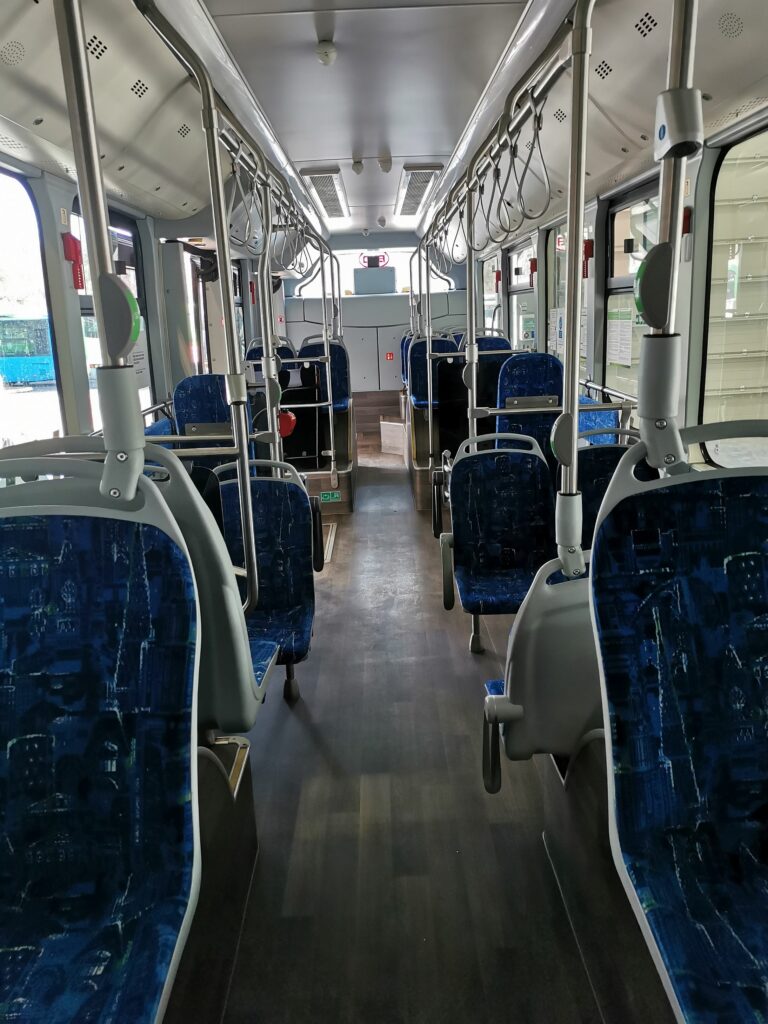
Az előadások után a résztvevők a Tüke Busz egyik elektromos autóbuszával a karbantartó telephelyre utaztak, ahol részletes tájékoztatást kaptak az elektromos járművek üzemi tapasztalatairól, napi karbantartási feladatairól, a töltési technológiáról és a jellemzőbb hibaforrásokról.
Összességében elmondható, hogy bár vonzó az elektromos járművek használata, a közösségi közlekedésben való teljes elektromos átálláshoz még sok tapasztalat és még több forrás hiányzik ahhoz, hogy ez mindenhol megtörténjen.
A következő Magyar CIVINET – INTERREG Dynaxibility4CE közös szakmai találkozót 2022. május 3-án tartjuk online „Hogyan tervezzük a fenntartható mobilitást? Egy nemzetközi projekt tapasztalatai” címmel. Jelentkezni ezen a linken lehet.
The European Commission has launched two road safety public consultations and is inviting citizens and other interested parties to express their views on several aspects of the following:
For driving licences, these include driver training and probation periods; the introduction of digital driving licences; and the mutual recognition of driving disqualifications. On cross-border enforcement, they include mutual assistance and recognition procedures for cross-border investigations of road-safety-related traffic offences and cross-border enforcement of penalties; and improving regulatory reporting and monitoring.
Forthcoming legislation in these two areas aims to improve road safety in the EU, in line with the EU’s commitment to halving the number of road fatalities by 2030. The legislation will also facilitate the free movement of people within the EU, and accelerate digitalisation of the sector. The revisions of the current legislation are among actions set out in the Sustainable and Smart Mobility Strategy.
The public consultations will feed into the ongoing work on impact assessments for the two initiatives, and help the Commission identify potential measures for incorporation in the legislative proposals. The consultations will run until 20 May 2022.
European Commissioner for Transport, Adina Vălean, said: “A wider harmonisation of driving licensing rules is key to ensure safer roads across the EU. Training is an important aspect, especially for novice drivers and to embrace new technologies that can promote road safety even further. There have indeed been many evolutions in road design, vehicle features and there are simply more people on the road, making driving more challenging. Digital driving licences can become an important step facilitating the free movement of people. However, we will also need to ensure that road safety rules are respected in the whole EU, that drivers in cross-border traffic respect road legislation when driving in another Member State. I count on industry, civil society, academia, and public authorities to help us identify the challenges and solutions that can support our efforts to make the EU roads safer.”
As part of the TRIBUTE project “Integrated and innovative actions to improve sustainable urban mobility”, the first workshop of the Living Lab was held on Wednesday, February 23, 2022. in the hotel “Europe” in Sarajevo. The main goal of the project is to improve urban mobility through the development of innovative, more efficient services and tailored solutions in accordance with the new EU goals on sustainable, integrated and inclusive mobility, which is the vision of the Sustainable Urban Mobility Plan of Sarajevo Canton and Sarajevo City.
The workshop brought together relevant ministries, municipalities, private companies, education institutions, associations and NGOs involved in the promotion of sustainable urban and electro mobility. Workshop participants discussed how best to move from vision to roadmap to successful action planning and implementation. The special focus of the workshop was the concept of Mobility Island, which was presented by experts from the consulting company CETEOR from Sarajevo.
Mobility Island implies a vision of a “5-minute city”, the comfort and choice of shared electric mobility within a 5-minute walk of anywhere in the city. Mobility Island is a physical place that serves the discrete needs of the locality within which it is located. So, the ‘Lego’ analogy is the possibility of placing a different number of physical things, related to mobility or other services that suit that location. It also makes it easy to expand as needs change. This concept consists of physical infrastructure such as land, smart lighting, charging stations for electric vehicles, a common e-car service, electric wheelchairs for the elderly, renewable energy sources and digital services.
Participants concluded that cities need to transform their mobile infrastructure, services and movement habits that society has in and around their cities. In this regard, Mobility Islands presents a new concept, offering the potential to initiate change by establishing a visible and very different concept of mobility.
The TRIBUTE project is implemented by eight cities in the Adriatic-Ionian region, namely Ljubljana, Maribor, Milan, Novi Sad, Patras, Podgorica, Sarajevo and Zagreb, led by Politecnico di Milano. The project is supported by the Interreg ADRION program funded by the European Regional Development Fund and the IPA II Fund.
All those who have an interest in the topic of urban mobility or believe that in some other way they can contribute to the implementation of the TRIBUTE project by participating in the Living Lab can contact us by email: nermina.suljevic@sarajevo.ba
We use cookies on our website to give you the most relevant experience by remembering your preferences and repeat visits. By clicking “Accept”, you consent to the use of cookies. The selection of necessary and optional cookies can be changed via the settings.
This website uses cookies to improve your experience while you navigate through the website. Out of these, the cookies that are categorized as necessary are stored on your browser as they are essential for the working of basic functionalities of the website. We also use third-party cookies that help us analyze and understand how you use this website. These cookies will be stored in your browser only with your consent. You also have the option to opt-out of these cookies. But opting out of some of these cookies may affect your browsing experience.
Necessary cookies are absolutely essential for the website to function properly. This category only includes cookies that ensures basic functionalities and security features of the website. These cookies do not store any personal information.
Any cookies that may not be particularly necessary for the website to function and is used specifically to collect user personal data via analytics, ads, other embedded contents are termed as non-necessary cookies. It is mandatory to procure user consent prior to running these cookies on your website.




 Finally, UVARs are not stand-alone policies. They are put in place by local governments in conjunction with a “package of accompanying or interlinked measures” that improve mobility for all in a cleaner, safer and more inclusive way. When Milan introduced its congestion charge scheme in 2012; the city introduced a range of complementary measures including additional public transport lines and frequencies, upgraded cycling networks, P&R facilities, and free parking for loading and unloading. To find out more, read