
SUMP Central

News

city, buildings, urban-4761682.jpg

The 100 cities selected to lead the EU’s ‘Climate-Neutral and Smart Cities’ Mission announced

The Commission has announced the 100 EU cities that will participate in the EU Mission for 100 climate-neutral and smart cities by 2030, the so-called Cities Mission. The 100 cities come from all 27 Member States, with 12 additional cities coming from countries associated or with the potential of being associated to Horizon Europe, the EU’s research and innovation programme (2021-2027).

Our urban areas are home to 75% of EU citizens. Globally, urban areas consume over 65% of the world’s energy, accounting for more than 70% of CO2 emissions. It is therefore important that cities act as experimentation and innovation ecosystems to help all others in their transition to become climate-neutral by 2050.

Ursula von der Leyen, President of the Commission, said: “The green transition is making its way all over Europe right now. But there’s always a need for trailblazers, who set themselves even higher goals. These cities are showing us the way to a healthier future. We will support them on this! Let’s begin the work today.”

The Cities Mission will receive €360 million of Horizon Europe funding covering the period 2022-23, to start the innovation paths towards climate neutrality by 2030. The research and innovation actions will address clean mobility, energy efficiency and green urban planning, and offer the possibility to build joint initiatives and ramp up collaborations in synergies with other EU programmes.

Benefits for cities include tailor-made advice and assistance from a dedicated Mission Platform run by NetZeroCities, additional funding and financing opportunities and the possibility to join large innovation actions and pilot projects. The Mission also provides networking opportunities, exchange of best practices between cities and support to engage citizens in the mission.

Next steps

The Commission will invite the 100 selected cities to develop Climate City Contracts, which will include an overall plan for climate neutrality across all sectors such as energy, buildings, waste management and transport, together with related investment plans. This process will involve citizens, research organisations and the private sector. The clear and visible commitments made by the cities in the Climate City Contracts will enable them to engage with the EU, national and regional authorities – and most importantly with their own citizens to deliver on this ambitious objective.

Moreover, in light of the overwhelming interest from 377 cities to join the mission, the Commission is also putting in place support for cities that were not selected, including support through the Mission Platform and funding opportunities under the Cities Mission Work Programme of Horizon Europe.

Members of the College said:

Executive Vice-President Frans Timmermans, for the European Green Deal, said: “Cities are at the forefront of the fight against the climate crisis. Whether it’s greening urban spaces, tackling air pollution, reducing energy consumption in buildings, or advancing clean mobility solutions: cities are often the hub of the changes Europe needs to succeed in our transition to climate neutrality. My congratulations to the cities selected today, I look forward to the solutions you will develop to guide your inhabitants and businesses towards a greener future.”

Executive Vice-President Margrethe Vestager, for A Europe Fit for the Digital Age, said: “We need to speed up Europe’s transition to climate neutrality, to end our reliance on fossil fuels, and to deliver benefits such as cleaner air and lower energy bills for our citizens. It is great that so many cities will participate. We can support their ambition with our EU research and innovation budget. The Cities Mission has the potential to make a major contribution to our Green Deal and for Europe to become a climate neutral continent by 2050.” 

Mariya Gabriel, Commissioner for Innovation, Research, Culture, Education and Youth, said: “Horizon Europe Missions have a great potential to deliver the European Green Deal objectives, including European energy security. The selected cities represent a first step covering a wide geographical footprint. We want that concrete benefits reach all our regions and citizens, through innovation, empowering large and small cities with different levels of experience and capacities. I encourage all cities to reach out and work with all stakeholders, including of course their citizens, to achieve together our ambitious goals.”

Adina Vălean, Commissioner for transport, said: “In their quest to become smart and climate-neutral by 2030, the 100 EU cities announced today will be natural “test beds” for innovative integrated solutions to many of the issues facing our citizens today, including urban mobility. Drawing on our New Urban Mobility Framework, they have the tools to making interurban and urban mobility healthy and sustainable, for instance by doubling high-speed rail traffic and developing extra cycling infrastructure over the next 10 years, investing in safe bike lanes, and ensuring connectivity with rural and suburban areas so that commuters are given sustainable mobility options. I am sure they will succeed, and I encourage other cities across Europe to follow their lead.”

Virginijus Sinkevičius, Commissioner for Environment, Oceans and Fisheries said: “The Mission for climate-neutral and smart cities will help us deliver our environmental commitments on zero pollution, biodiversity and circular economy. Many of the selected cities have already shown their environmental credentials in our Green Capital, Green Leaf and Green City Accord initiatives by tackling air, noise and waste issues. These cities’ ambitions for climate and innovation, as well as the Mission’s wider research funding, will help make urban living greener, cleaner and healthier for European citizens.”

Background

The call closed on 31 January 2022. In a first step, independent experts evaluated each expression of interest. In a second step, the Commission applied additional criteria to ensure a geographical balance and a diverse group of cities in terms of size, impact and innovative ideas. Overall, 377 cities applied to be part of the cities mission. The 100 EU Cities chosen today represent 12% of the EU population.

The Commission launched the Mission for 100 climate-neutral and smart cities by 2030 in September 2021 with the adoption of a Communication on EU missions. This following the approval of the missions’ individual implementation plans in summer 2021. As well as the Cities Mission, there are four other EU missions covering global challenges in the areas of adaptation to climate change, restoring our ocean and waters, healthy soils and cancer. A dedicated Work Programme for Horizon Europe Missions was published on 15 December 2021.

Missions are a novelty of Horizon Europe and support Commission priorities, such as the European Green DealEurope fit for the Digital AgeEurope’s Beating Cancer PlanAn economy that works for people and the New European Bauhaus. For instance, Mission Climate is already a concrete element of the new Climate Adaptation Strategy, Mission Cancer of Europe’s Beating Cancer Plan and the Mission Soil is a flagship initiative of the Long-term Vision for the EU’s Rural Areas.

For more information

Factsheet ‘EU Cities Mission: Meet the Cities’

Q&A

Video

100 climate-neutral and smart cities by 2030

The 100 cities selected to lead the EU’s ‘Climate-Neutral and Smart Cities’ Mission announced Read More »

A Magyar CIVINET brnói tanulmányútja

2022. április 20-21-én 15 magyar önkormányzati képviselő és közlekedési szakember látogatott el Brnóba (Csehország) a Magyar CIVINET és a CIVINET Česká a Slovenská republika (Cseh és Szlovák CIVINET) közös szervezésében. A kétnapos tanulmányút célja az volt, hogy a résztvevő polgármesterek, alpolgármesterek, képviselők, valamint hivatali városfejlesztési és közlekedési szakemberek első kézből megtapasztalhassák, hogy egy Magyarországéhoz hasonló közép-európai kulturális környezetben lévő város milyen látványos eredményeket érhet el jól átgondolt város- és moilitástervezéssel és annak szisztematikus, bátor megvalósításával.

Az eseményt a cseh Közlekedéskutató Központ (CDV) munkatársai nyitották meg. Ezt követte Iva Rorečková, a brnói önkormányzat közlekedésfejlesztési koncepcióért és stratégiáért felelős osztályvezetőjének előadása, mely a Fenntartható Városi Mobilitási Tervről (SUMP) szólt. A terven 2014-ben kezdtek el dolgozni, majd 2018-ban fejezték be. Brno sok nemzetközi projektben (INTERREG, CIVITAS stb.) vett részt, melyek elősegítették a városi közlekedés fenntartható szemléletű tervezését és fejlesztését, hiszen a projekteken keresztül sok hasznos információhoz és kapcsolatokhoz jutottak hozzá. A SUMP tervezésekor fontos szempont volt, hogy egy olyan dokumentum keletkezzen, amely széles körben elfogadott, ezért elfogadását komoly társadalmasítási folyamat előzte meg. A terv a brnói agglomerációt magába foglaló térség (Brno Metropolitan Oblast, BMO) egészét érinti, mely 167 települést és mintegy 600.000 lakost jelent. A SUMP víziója, hogy 2050-re széleskörű módváltás következzen be a közlekedésben. Ennek részeként a kerékpáros és a gyalogos közlekedés részarányát is növelni szeretnék a városban. A víziót elősegítve minden évben akciótervet készítenek   a SUMP-on belül.

Ezt követően Petr Šašinka, az önkormányzat Stratégiai Fejlesztési és Együttműködési Osztály vezetője adott elő a város Integrált Településfejlesztési Stratégiájáról (ITS). Ennek az Európai Uniós eszköznek a lényege, hogy a városi projektek tevékenységeit és pénzügyeit koordináltan, integráltan tervezzék meg. A brnói funkcionális városi térségben a 2014 és 2020 közötti finanszírozási időszakban 125 projektet támogattak mintegy 10 milliárd cseh korona értékben. A projektek közel egyharmada Brnón kívül valósult meg. Kiemelt célja volt továbbá a környék szakembereinek összekapcsolása is. Az új, 21+ stratégia célkitűzése, hogy a brnói nagyvárosi térség fenntartható és kiegyensúlyozott legyen, valamint kellemes és virágzó lakhellyé fejlődjön.

Az előadássorozatot Jan Seitl, a Brnói Közösségi Közlekedésszolgáltató üzemeltetési igazgatója zárta. Beszédében a brnói közösségi közlekedésről adott átfogó képet. A város közösségi közlekedése 11 villamos-, 12 trolibusz- és 57 autóbuszvonalból és egy hajójáratból áll. Míg a férőhelyszámot tekintve az utasok kétharmada elektromos meghajtású járművön (troli és villamos) utazik, ha a viszonylatok hosszát nézzük, az autóbusz teszi ki a közlekedés nagyrészét. A közösségi közlekedés alaphálózatát a villamosvonalak rendszere képezi, ezt egészítik ki a trolibusz- és autóbuszvonalak a kisebb forgalmú irányokban. Ezt a stratégiát a folyamatban lévő és a jövőbeni fejlesztések során is következetesen alkalmazzák, a nagyobb forgalmat vonzó új létesítményekhez automatikusan a villamoshálózat bővítését is megtervezik.

Az első napot egy helyszíni bejárás zárta a Komin troligarázsban. A közlekedési szolgáltató jóvoltából különvillamos szállította a kollégákat, ahol a műszaki és üzemeltetési folyamatokba lehetett betekintést nyerni. A közlekedési szolgáltató célja, hogy minél hatékonyabban és olcsóbban tudják bővíteni a trolibuszok számát a fenntarthatóság szempontjait szem előtt tartva, törekedve az önjáró üzemmód kibővíthetőségére is.

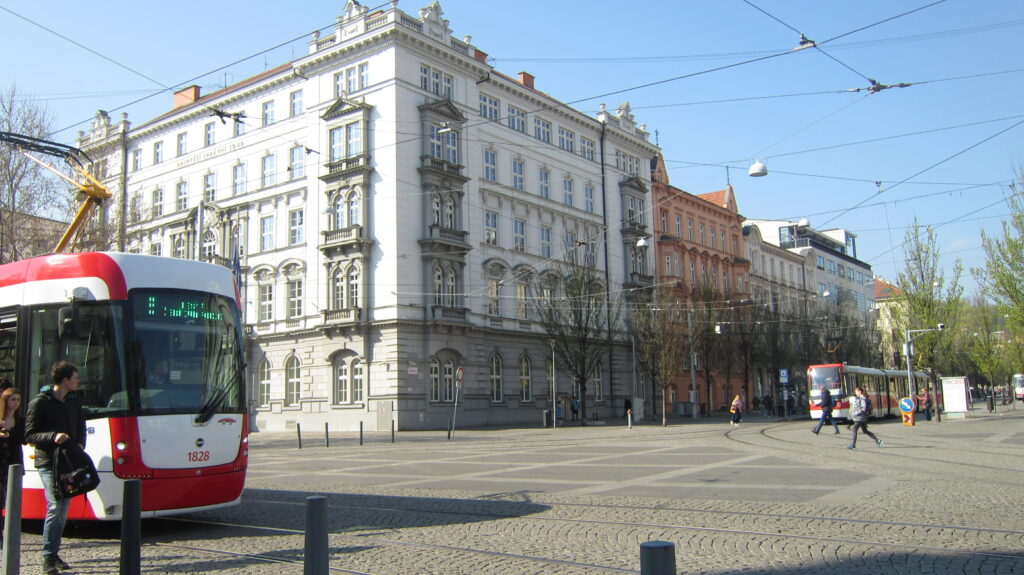
A második nap egy sétával kezdődött, melyet Michal Bojgart vezetett a CDV-től. A séta során a résztvevők megtapasztalhatták, hogy hogyan működik egy város, melynek a teljes történelmi magja forgalomcsillapított. A belvárosban a közlekedésben a gyaloglás mellett egyértelműen a közösségi közlekedés, és azon belül is a villamosok dominálnak. A történelmi városmagba, melynek területét egy körgyűrű övezi, csak a közösségi közlekedés járművei, illetve behajtási engedéllyel rendelkező áruszállító járművek és az ott lakók gépkocsijai hajthatnak be. Az autóval érkezők a körgyűrű mentén elhelyezkedő kisebb parkolóterületeken és mélygarázsokban/parkolóházakban tudják letenni járműveiket. A másfél óra alatt kevés kerékpárost láthattak a résztvevők, melynek magyarázata, hogy Brno nem egy kifejezetten kerékpárbarát város, de ezen a jövőben szeretnének javítani. Jelenleg a kerékpárutak főleg rekreációs célokat szolgálnak (erdőben épített utakkal stb.).

A szakmai tudnivalók mellett a résztvevők megcsodálhatták a főbb turisztikai látványosságokat is.

A délelőttöt a Dél-Morva Régió Integrált Közlekedésszervező irodájában folytatták a résztvevők, ahol Květoslav Havlik, a cég igazgatóhelyettese tartott előadást. Mivel Magyarországon a közlekedés szervezésében a régiók szerepe minimális, az előadást a távolsági közlekedés történelmi aspektusával kezdte. A mai régiókat 2001-ben alakították ki, előtte a közlekedés kevésbé volt integrált. A régiók úgy kerültek kialakításra, hogy mindegyik körülbelül egymillió lakost foglaljon magába, és hamar megkapták azokat a jogkörüket, amelyek lehetővé tették, hogy megszervezzék a közösségi közlekedést. Így ma már minden régiónak van egy szervezete, amely a hálózatokért, menetrendekért, a díjtermékpalettáért, a regionális buszok és vonatok egy részének az irányításáért, és az elektronikus utastájékoztatásért felel. A közlekedésszervező-iroda az érintett önkormányzatok, a régió és az állam közösségi közlekedéssel kapcsolatos hatásköreit egységes rendszerben gyakorolja, így az utasok számára mind tarifálisan, mind színvonalban egységes szolgáltatás jelenik meg. Ez jelentős különbség a hazai rendszerhez képest, és komoly vonzerő az ingázók és eseti utasok számára is.

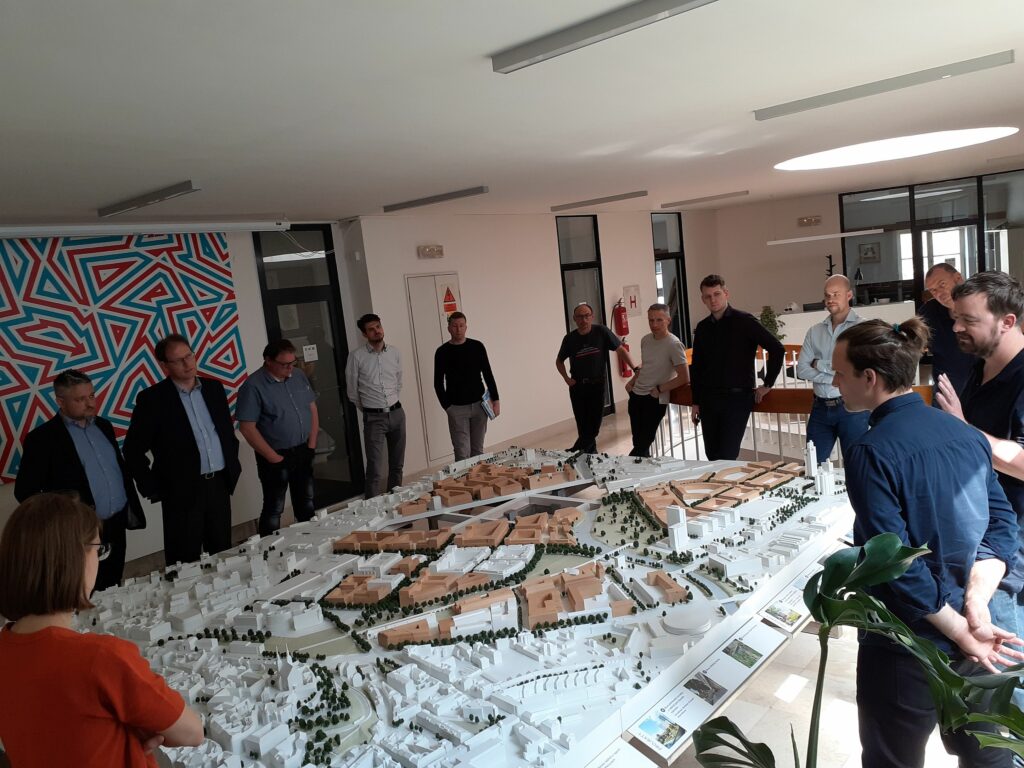
Brno – a fizikai közelsége miatt is – mindig is közelebb állt Bécshez, mint Prágához. Ezt mutatja az is, hogy az első vonat Bécsből érkezett meg a városba 1839-ben, a vasútállomás mostani helyére. Az állomás kapacitása azonban már nem bírja a jelenlegi forgalmat, ezért egy kilométrrel arrébb szeretnék helyezni. Az áthelyezésről nagyon sok vita zajlik: mintegy. a lakosság fele támogatja a koncepciót, a másik fele azonban szeretné, ha az eredeti helyén maradna az állomás. Az új vasútállomás 3D-s modelljét mutatta meg Martin Všetečka, a Főépítész Iroda Közlekedési Osztályának vezetője.

A tanulmányút a CIVITAS ELEVATE Activity Fund jóvoltából valósulhatott meg.

Eredetileg megjelent a Mobilissimus honlapján.

Korábbi cikkek:

Beszámoló a korábbi Magyar CIVINET tanulmányútról

A Magyar CIVINET brnói tanulmányútja Read More »

Urban Mobility Days 2022

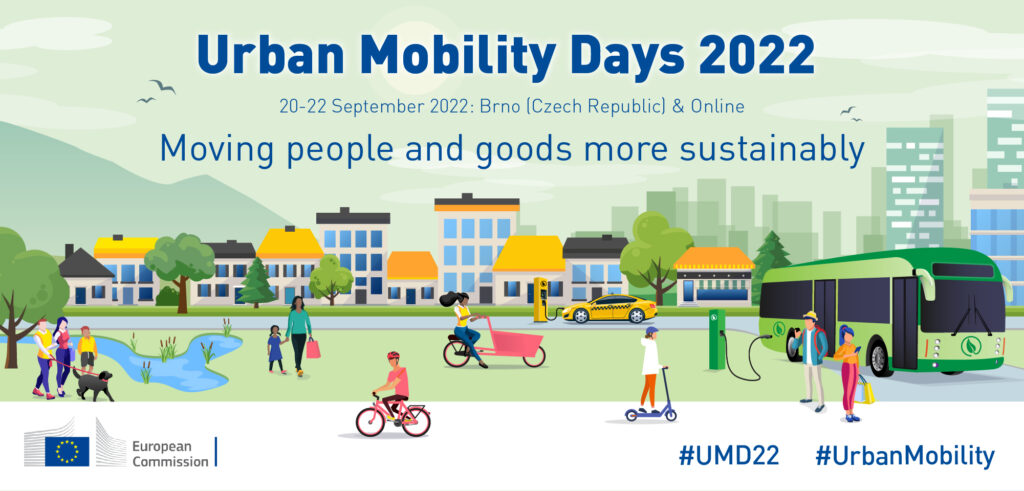
Urban Mobility Days 2022 will be held on 20-22 September in the city of Brno, Czech Republic.

Following in the footsteps of previous successful conferences, this year’s theme is “Moving people and goods more sustainably”. More than 70% of Europeans live in cities, and urban areas account for around 23% of the EU’s GHG transport emissions. If we are to achieve ambitious climate targets, transforming urban mobility will be critical.

Across two days, policymakers, local authorities, academics, NGOs, urban transport practitioners, and urban planners convene to traverse the length and depth of sustainable urban mobility, examining the challenges and solutions at hand.

The conference is being organised together with the Czech Presidency of the Council of the EU.

Click here for more information.

Source: European Commission

Urban Mobility Days 2022 Read More »

SHOW pre-acceptance survey: Have your say on automated mobility!

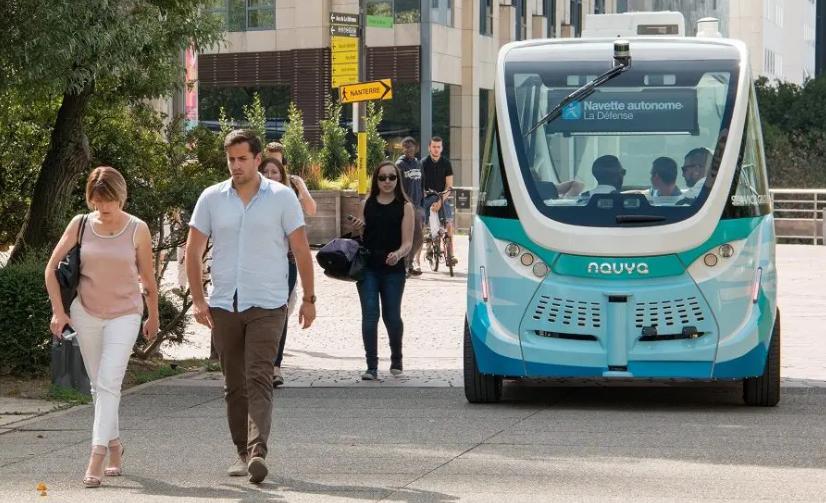
User demand and user acceptance are critical success factors for the market uptake of AV solutions. Technology is a mean, not a goal. By involving both end-users and stakeholders in the development process, we aim to ensure that the SHOW project services meet their needs and requirements and to increase the positive impacts on society.

SHOW has launched its pre-acceptance survey, to get a deeper understanding of citizens’ needs, wants and acceptance of transportation solutions today and in the future, when automated solutions will be a part of the system. Anyone who wishes to share their thoughts on automated mobility can participate in the survey!

You can access the survey here (available in English, French, Spanish, German, Swedish, Finnish, Danish, Italian, Greek, Dutch, and Czech).
Completing the survey takes approximately 10 minutes.

If you are in interested in SHOW’s development (technical progress, coming events, etc.), please subscribe to SHOW Newsletter and visit SHOW social media channels.

SHOW pre-acceptance survey: Have your say on automated mobility! Read More »

inclusion, group, wheelchair-5249903.jpg

Guide published on making walking and wheeling inclusive

A guide has been published to support national and local governments, including spatial planning professionals, as well as other organisations, make walking and wheeling more inclusive. The guide, “Walking for everyone: A guide to making walking and wheeling accessible, inclusive, and desirable”, contains recommendations that, if implemented, will help to improve the lives of people who may be marginalised or find it challenging to move around cities on foot or using an assisted mobility vehicle. The guide has been developed by Sustrans (the UK charity working to facilitate walking and cycling for all), the UK walking charity, Living Streets and consultancy, ARUP.

Current urban environments and active travel infrastructure do not always cater for the needs of less mobile travellers. As cities seek to reduce transport-related emissions and cut congestion, equitable and accessible active mobility will be crucial. The report provides guidance on addressing barriers to accessibility and on creating urban environments which work for all user groups.

The guide highlighted many issues. For instance, 72% of disabled people would find fewer cars parked on the pavement helpful in walking or wheeling more. The report also addresses the lack of disaggregated data on mobility patterns, so bringing together existing knowledge is a key area where more research is required.

To address the challenges faced by local authorities, the paper outlines a series of recommendations for local and national governments. Improved governance, planning and decision making, by creating inclusive walking and wheeling plans, supported by long-term funding, as well as ensuring that services and amenities are within walking distance of where people live, are all needed. The guide also called for the creation of better places for everyone to walk and wheel in, supported by the development of national design guidance for walking and wheeling to improve road safety and air quality. Investment in walking and wheeling programmes is also important, as is action to reverse the decline in independent childhood mobility.

This article originally appeared on Polis Network on 4 April 2022.

Guide published on making walking and wheeling inclusive Read More »

New ERTRAC CCAM Roadmap available

ERTRAC, as European Technology Platform gathering experts from industry, research and public authorities, provides regular updates of its Roadmap on Connected, Cooperative and Automated Mobility, delivering a common stakeholder view on the long-term development of CCAM in Europe.

The Roadmap is structured according to a Vision for 2050, with long-term objectives for society. This long-term Vision calls for necessary medium-term actions, the Agenda 2030, allowing then an Outlook to 2040.

Technology enablers have been updated and much extended, with a focus on infrastructure support for automation, and key topics such as Artificial Intelligence and Data. The chapter listing national initiatives taking place in Europe and around the world has also been fully updated.

Download the ERTRAC CCAM Roadmap

New ERTRAC CCAM Roadmap available Read More »

5G-MOBIX wants your opinion on automated vehicle functionalities

5G-MOBIX is releasing a survey (available in English, Portuguese, Spanish, Greek, French, German, Italian) to assess user acceptance of automated vehicle functionalities using 5G connectivity.

The 5G-MOBIX research project is co-funded by the European Commission to evaluate the benefits of 5G connectivity for connected & automated mobility services in cross-border areas.

This survey’s purpose is to assess people’s opinion about different issues related to automated vehicle functionalities using 5G connection. There are no right or wrong answers and when unsure, please select the alternative that comes closest to your own beliefs.

Answering the survey will not take much of your time (maximum 10 minutes): it consists of a series of statements for which to indicate whether you agree or disagree (don’t be deterred by the long introduction, which includes several illustrations and explanatory text for each scenario provided as reference to answer the survey).

Links to the survey in:

English

French

German

Greek

Italian

Portuguese

Spanish

5G-MOBIX wants your opinion on automated vehicle functionalities Read More »

3 videos, 3 cities, 3 successful UVARs

This article showcases the achievements of three European cities that have gone beyond all expectations. Through a short description, timeline and video, discover how Barcelona, Mechelen and London established ambitious UVARs that transformed urban public space and improved people’s quality of life.


Barcelona is using its iconic grid plan structure to create livable urban pockets. By grouping 9 blocks together, that’s approximately 400 x 400 meters, the Spanish city created “superblocks” (superilles). These areas of public space prioritize active travel modes and limit motorized traffic vehicles.

Barcelona’s superblock implementation timeline


The Belgian city of Mechelen has changed a lot. With the participation of citizens, the city centre become a cycle zone with 179 cycling streets. They give cyclists priority over motorized vehicles or are all together car-free. Therefore, the urban freight industry switched to cargo bikes to increase the flexibility and accessibility of their activities. This shift happened through the city of Mechelen and the CIVITAS City Changer Cargo Bike project’s awareness campaigns, electric bike cargo sharing scheme, and the inclusion of cargo bikes in the city’s fleet.

Mechelen’s cycling zone timeline


London’s Ultra Low Emission Zone (ULEZ) and pollution charge are famous. In a nutshell, vehicles in the capital’s city centre – up until the North and South Circular Roads – need to either meet the ULEZ emissions standards or pay a daily charge. Although organized through multiple public consultations, the ULEZ faced equity issues resulting in exemptions, discounts and financial incentives. However, the ULEZ did lead to remarkable results in air pollution reduction.

London’s ULEZ and Pollution Charge timeline

  • To learn more about London’s air pollution problem and how its ULEZ works, watch WRI Ross Center for Sustainable Cities’ 4 min video London’s Ultra Low Emission Zone

The article’s content and visuals were extracted from Jente Versigghel and Koos Fransen’s (Ghent University) unpublished research work.

As a reminder, London and Vitoria-Gasteiz are ReVeAL case study cities.

3 videos, 3 cities, 3 successful UVARs Read More »

The sustainable success of Vitoria-Gasteiz

To become a world leader in clean mobility, the municipality has aligned, over the years,  political and financial resources to shift the way its residents move. Its most recent plans – the City’s Agenda (2019-2023) and the new Sustainable Mobility and Public Space Plan (2021-2025) – lay out ambitious sustainable mobility targets, with clear timelines and milestones, to gradually give public space back to pedestrians, bicycles and public transport.

Vitoria-Gasteiz has thoroughly documented its mobility transition, and the data walks the talk. Between 2006 and 2019, the modal share of private motor vehicles decreased from 36.5% to 29%, whilst the share of public transport increased from 43% to 49.5% and cycling from 3.3% to 8.5%.  Moreover, annual public transport passengers grew from 12.7 million in 2008 to over 24.5 million in 2019.

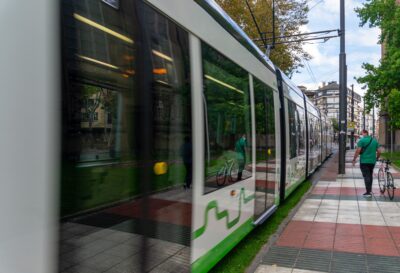
These shifts are the result of the city’s strategic plans and investments in mobility services and infrastructure, like the introduction of a tram system and cycling networks.

In February, the Spanish Government revealed that the city of Vitoria-Gasteiz will receive 11 million euros from the EU recovery package “Next Generation EU”. These funds will be used to further anchor the city’s Low Emission Zone (LEZ) and develop other sustainable mobility projects.

Between 2022 and 2023, residents of Vitoria-Gasteiz will witness the extension of the city’s cycling network and bicycle parking spaces, improvements in pedestrians’ accessibility to the Central Superblock, modernized and digitalized parking regulations, the creation of last-mile micro-logistics hubs for sustainable deliveries and the development of the Electric Mobility Center, amongst others

Overall, the comprehensive mobility package will lead the way to the city’s transition to sustainable mobility, reduce greenhouse emissions and improve public health in Vitoria-Gasteiz, as well as protect the Medieval Quarter.

The sustainable success of Vitoria-Gasteiz Read More »

5G Talks – Meet one of 5G-MOBIX Greek partners: ICCS

5G-MOBIX recently interviewed the Institute of Communications and Computer Systems (ICCS) which is based in Athens, Greece. The interview highlights ICCS’s role within the project consortium, presents the Greek-Turkish cross-border corridor, and expands on the latest developments and upcoming steps in the cross-border corridor.

Together with several other partners, ICCS is working on the Greek-Turkish cross-border corridor, which presents the unique characteristic of corresponding to a so-called “hard-border” where authorities enforce a stop-and-go mobility model, which presents a different set of mobility-related challenges. At the same time, it provides an environment for experimental evaluation of other types of applications related to the broader domain of 5G-enabled IoT and logistics e.g., in the form of customs inspection.

Having performed full-scale trials including various network configurations which will shed light on technical aspects related to e.g. inter-PLMN connectivity e.g., Leased Line vs. Internet-Based, and various handover schemes, the Greek-Turkish cross-border corridor is organising a public demonstration on 10 May 2022.

Read the full interview

5G Talks – Meet one of 5G-MOBIX Greek partners: ICCS Read More »