Is it possible for a truck to cross the busy Greek -Turkish border seamlessly, without (any action from the) driver or requirement to stop? The Greek and Turkish partners of the 5G-MOBIX project demonstrated that connected and automated mobility (CAM) is not some futuristic scenario but is occurring now, even under challenging circumstances such as crossing hard land borders.
Connected automated mobility use cases come with challenging connectivity requirements, 5G cellular technology is deployed at the right time to fulfil these requirements – at least in metropolitan centres. In rural areas or along motorways across borders, the deployment is slower due to lower population densities and thus, lower commercial investment incentives for mobile network operators (MNOs).
The 5G-MOBIX project consortium, which brings together 58 partners from 13 countries, including from the EU, Turkey, China, and South Korea, has developed and evaluated automated vehicle functionalities using 5G core technological innovations along two cross-border corridors and several urban trial sites. The Greece- Turkey cross-border corridor is one of them. Located on the south eastern border of Europe, between Kipoi, Greece and Ipsala, Turkey, this trial site provides a strategic geopolitical environment, a pertinent testing ground for the operation of CAM use cases at a hard EU border.
During the demonstration on 10 May 2022, the Greece-Turkey trial site partners presented different user stories and showcase the impact of tested solutions that target the specific characteristics of this dynamic border route. More specifically, the demonstrations showed how the heavy commercial traffic in this border region – created by large numbers of queuing trucks – may be alleviated by implementing platooning, automated truck routing and assisted border crossing.
These field trials bring insights into the benefits of 5G in the CAM context. Various protocols, scenarios and 5G features have been tested under conditions of regular vehicular traffic, network coverage, service demand, as well as considering the inherently distinct legal, business, and social aspects at each site. Their performance is being evaluated in the context of cross-border challenges concerning telecommunication infrastructure, application security, privacy and regulatory issues.
“CAM traffic, especially commercial long haul traffic, is fundamental to a functioning economy and society, and is not bound to single countries,” says Coen Bresser, Senior Manager Innovation & Deployment at ERTICO-ITS Europe and 5G-MOBIX project coordinator. “Realizing seamless border crossings really is key to the success of CAM. Only by solving the current coverage gap can we realize the full benefits of CAM and with the emerging deployment of 5G, we have a key opportunity to fix it.
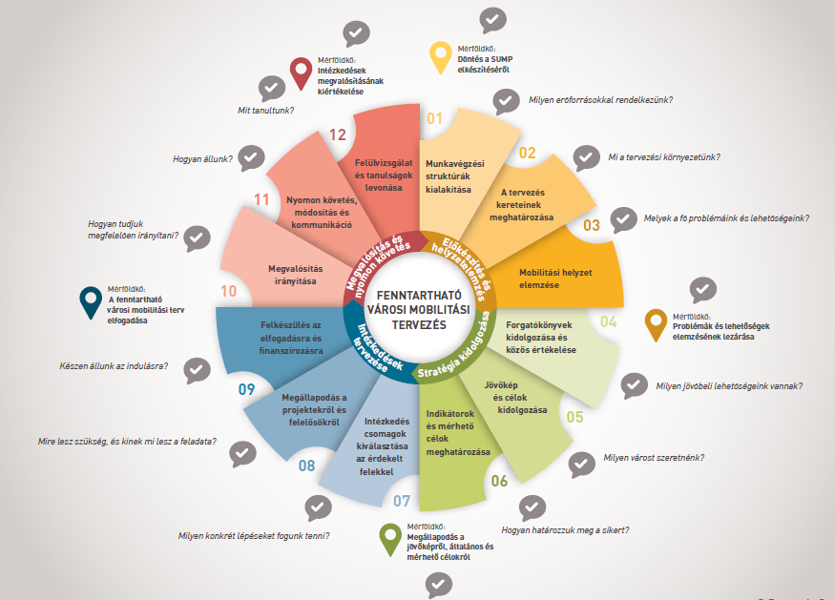
2022. május 3-án került megrendezésre Hogyan tervezzük a fenntartható mobilitást? címmel a Magyar CIVINET és az INTERREG Dynaxibility4CE projekt közös online szakmai találkozója. Az esemény két blokkból állt: az első szekcióban a Fenntartható Városi Mobilitási Terv (SUMP) volt a fókuszban, majd a kávészünet utáni szekcióban a projekt tapasztalatairól lehetett előadásokat hallgatni.
Az első előadást Katona Zsuzsanna tartotta, aki a Pénzügyminisztérium Stratégiai Tervezési és Értékelési Főosztály programirányító referense. Előadásában a Terület- és Településfejlesztési Operatív Program Pluszon belül a fenntartható városfejlesztési stratégiák támogatását célzó felhívásokra tért ki részletesebben, ezzel elősegítve a potenciális városokat a releváns dokumentumokra vonatkozó támogatási kérelem benyújtására.
Hajnal Tünde, a BKK mobilitástervezés osztályvezetője a SUMP tervezés budapesti gyakorlatáról beszélt. A 2019-es Budapesti Mobilitási Terv felülvizsgálata jelenleg is zajlik – alkalmazkodva az újabb kihívásokhoz. Átfogó cél volt, hogy a fővárosi közlekedési rendszer „javítsa a főváros és térségének versenyképességét és járuljon hozzá a fenntartható, élhető, vonzó és egészséges városi környezet kialakításához”. A legfontosabb stratégiai célok közé tartozott tehát az élhető városi környezet; biztonságos, kiszámítható és dinamikus közlekedés és a kooperatív térségi kapcsolatok.
Ezt követte Dr. Szele András, a Mobilissimus vezető szakértőjének előadása, melyben a hazai kisvárosi SUMP tapasztalatairól számolt be. A jellemző problémák és megoldások négy kisvárosi SUMP (Paks, Zirc, Bicske és Mátészalka) példáján keresztül kerültek bemutatásra. A kis- és középvárosokra többek között a csökkenő lélekszám, a központhoz való kapcsolódás és növekvő motorizáció jellemző, ahol a közlekedés általában az első számú helyi probléma. Az előadás a nemrég kiadott (és hamarosan magyarul is megjelenő) SUMP útmutatóhoz kapcsolódott, melyről az utolsó blokk előadása szólt.
Morgane Juliat, a Rupprecht Consult fenntartható mobilitási tanácsadójaként beszélt az útmutatóról bővebben, mely a kis- és középvárosok részére íródott. Bár a 100.000-nél kisebb, de 5.000-nél nagyobb lélekszámú városok kevesebb humán erőforrással és kisebb költségvetéssel kell, hogy számoljanak, a SUMP alkalmazásából több előnyt is húzhatnak. A SUMP tervezés lépései és struktúrája megegyezik a nagyobb városokban alkalmazott módszertannal, ez az útmutató ugyanakkor több egyszerűsítési lehetőséget is bemutat.
Fotó: Holding Graz
A szünet utáni első előadást Wolfgang Backhaus tartotta, a Rupprecht Consult vezető munkatársa. Először a Dynaxibility projektről beszélt, mely több, korábban megvalósult projekt eredményeit használja fel és építi tovább. A projekt a dinamikus és komplexitás szavak kombinációjáról kapta a nevét: célja, hogy a változásokat egy dinamikus és komplex környezetben is le lehessen követni, azaz az új mobilitási trendeket (Mobility as a Service, CCAM, UVAR) hatékonyan lehessen integrálni a közlekedési rendszerekbe. Ez a SUMP tervezés folyamata szempontjából is fontos, hiszen a SUMP egy hosszú távú tervezési folyamat, de a technológia gyorsan változik, ezért folyamatosan alkalmazkodni kell. A projektben többek között a tematikus SUMP útmutatókat fejlesztették tovább.
Ezt követte Laura Babío, a Polis projekt menedzserének előadása a városi behajtási korlátozásokról (UVAR), és ezek integrációjáról a SUMP folyamatba. A projekt keretében áttekintették a főbb hiányosságokat, így jött létre a 2019-es útmutató függeléke, melynek részei a következők: a funkcionális várostérségben való tervezés szempontjai; Krakkó és Parma városok esettanulmánya; további közép-európai jó gyakorlatok, és egy úgynevezett “könyvtár” az újabb eszközökről, útmutatásokról.
Magdalena Senger a grazi önkormányzattól a város projektben betöltött szerepéről beszélt. Céljuk, hogy Grazban bevezessék a mobilitás, mint szolgáltatást (MaaS) a funkcionális városi térségben: azaz, hogy minden mobilitási lehetőséget kombináljanak, a köz- és magánszolgáltatásokat is. Ezáltal az ügyfél egyben tudja lefoglalni bármelyik mobilitási szolgáltatást, vagy akár azok kombinációját is. Ennek alapja a meglévő GrazMobil multimodális alkalmazás, amelyet egy korszerű MaaS platformmá fejlesztenek. Mivel a mobilitás nem áll meg a város határain, ezért nem csak Graz-ban, hanem egész közép-Stájerországban ki szeretnék terjeszteni.
A programot Vágány András, a BKK mintafejlesztés és modellezés vezetője zárta. A BKK – projektpartner lévén – a MaaS budapesti alkalmazásának és integrálásának akciótervét készítette el a projekt keretében. Az előadás kitért a budapesti „rollerkáosz” néven futó problémára és annak kezelésére adott válaszra: a mikromobilitási pontok létrehozására is.
After more than two years the Dynaxibility4CE project is coming to an end this year. Dynaxibility4CE supports public transport authorities to adjust and successfully developing new strategies and tools to make them key actors on the way towards less emissions and more mobility innovations.
The Final Conference of the Dynaxibility4CE project will take place on 17 May at the GaRaGe (Karl-Heine-Straße 97) in Leipzig, Germany. The conference, which will be held in the same week as the ITF 2022, will give you the opportunity to learn more about the achievements of Dynaxibility4CE related to MaaS, CCAM and UVAR.
Bulgaria is set to draft a new law to encourage electric mobility and provide incentives to buy electric vehicles. Plans for the new law were announced by Deputy Prime Minister for Climate Policy and Minister of Environment, Borislav Sandov in April. According to the Minister, the goal is to have at least 30,000 electric vehicles in Bulgaria by 2026..
Data from the European Alternative Fuels Observatory shows Bulgaria lags behind most European countries in terms of electric mobility. Some 3.3% of new passenger car registrations in 2021 were either battery electric vehicles (BEV) and plug-in hybrid electric vehicles (PHEV), while the share in the total fleet was 0.1% in the same year. In comparison, the average shares for the EU were 17.9% and 1.6% respectively.
Affordability is one major reason for the low uptake of electric vehicles in Bulgaria. Average prices for electric vehicles are higher than those for conventionally fuelled vehicles and average household income in Bulgaria is among the lowest in the EU. Unlike many other EU countries, electric vehicle purchases are not yet subsidised in Bulgaria – however, this is about to change.
Bulgaria’s Operational Programme Environment 2021-2027, which is EU co-funded, includes a measure to promote the replacement of old passenger vehicles with electric vehicles, providing a subsidy of up to EUR 6,200 per vehicle replaced. In addition, Bulgaria’s National Recovery and Resilience Plan also includes financial incentives for zero-emission vehicles.
A second major barrier for the uptake of electric vehicles is the lack of charging infrastructure. It is a classic chicken and egg dilemma where the lack of charging infrastructure deters people and business to buy electric vehicles, while the low number of electric vehicles deters investment in sufficient charging infrastructure.
According to Minister, Sandov, “Construction of charging infrastructure and electrification of vehicles will be accelerated, which will bring Bulgaria closer to the European long-term goals for greenhouse gas emissions reduction.” He stated that 10,000 charging stations should be built so everyone can charge their electric car. “This will create a dense charging network that focuses on the main areas where charging stations are needed, including 20-30 fast charging hubs on major roads. Public charging points for electric cars will be built in the central parts of more than 50 cities, as well as in large residential areas.”
A specialised commission for the development and encouragement of e-mobility will be appointed by the Government by the end of June 2022. It is to prepare a model of simplified regulation to encourage the construction of charging stations, while a long-term vision for the new law is going to be ready in the autumn.
The Slovenian city of Maribor has joined the group of cities that provides a public bicycle sharing service for its residents and visitors. The new system is called Mbajk and includes 210 bicycles based at 21 stations located in the broader area of the city centre.
Mbajk is designed to be used by those wanting single-ride hires within the city, and so is a scheme that complements public transport services, instead of those looking for multi-hour or full-day bike rental. Consequently, the first hour of any trip is free of charge for an unlimited number of hires.
Bicycles can be picked up at any station and left at any station. Renting a bicycle is undertaken either at a station’s terminal or by using the Mbajk mobile app. The only cost for people cycling less than 1 hour each time is a yearly registration fee of 3 euro; registration is undertaken on the service’s website.
Mbajk will operate all day, every day. The city of Maribor has a fixed 15-year contract with Europlakat, which provides 15 stations and 150 bicycles, with the remainder being provided by additional partners.
Saša Arsenovič, Mayor of Maribor, believes that the bicycle sharing service will see further expansion in the future.
Brussels is continuing to see an increase in the number of cyclists in the city. In the first two months of 2022, the number of cyclists in the Belgian capital has increased significantly compared to 2021: the growth in January and February 2022 was 25% and 32%, respectively, according to Brussels Mobility. The growth is being driven by dedicated active travel planning, which is continuing to be expanded.
Bike traffic has significantly increased during the weekday rush hour, and also in the evening and at night, especially at weekends. This is partially a result of the relaxation of health measures, which is seeing more people go out to restaurants and bars and using their bicycles to do so.
This builds on an ongoing effort across the capital to encourage active travel, which began even before the pandemic. Bike for Brussels, launched in 2017, aimed to create a ‘bike culture’ through a range of campaigns. Since 2020, like many cities across the globe, Brussels enhanced its (temporary and permanent) cycling infrastructure and rolled out a range of initiatives to encourage bike travel, including additional cycle lanes, repair centres and car free neighbourhoods.
In 2021, Brussels announced its intention to go even further, aiming to push cycling to 10% of total journeys by 2030. This is one of the objectives of ‘Good Move’, the region’s mobility plan, which won the European Award for Sustainable Urban Mobility Plans in 2020.
“Cycling is good for your health in several ways: it reduces traffic jams and therefore stress, and it improves air quality,” Elke van den Brandt, Brussels Minister for Mobility, told Brussels Times. This echoes her comments at POLIS Network’s recent political group summit in Paris, where, along with leaders from cities across Europe, van den Brandt reiterated Brussels’ commitment to reallocating space towards active travel.
Brussels is emphasising the health aspects of cycling to encourage further uptake, with Brussels Mobility launching a campaign targeting the over-40s who are more likely to use their cars for short journeys. To kick off the campaign, an ‘Open Air Spinning’ event will be organised on 8 May in the city centre, offering fitness exercises on three emblematic cycle paths of the capital.
This article originally appeared on Brussels Times, on 19 April 2022.
The abrupt changes to our societies and economies introduced by the COVID-19 crisis have clearly had an impact on public transport, its attractiveness and how it is delivered with swift reactions and measures put in place by operators and authorities.
In designing Sustainable Urban Mobility Plans (SUMPs) and attempting to secure resilient transport systems but also changing urban mobility patterns, public transport should be regarded as a critical challenge and made more attractive. Urban planners need to go beyond “business as usual” to achieve a tangible modal shift towards the most efficient and sustainable modes of transport and concretely tackle global warming.
In response to this, the second Policy Support Group of the CIVITAS ELEVATE Coordination and Support Action, with the involvement of 5 experts from selected organisations (International Association of Public Transport – UITP, European Passengers Federation – EPF, Technical University of Berlin – TUB, City of Gdynia, Gothenburg Transport Operator) the CIVITAS Policy Advisory Committee and the CIVITAS ELEVATE consortium members TRT and Breda University of Applied Sciences (BUAS), has prepared a draft SUMP Topic Guide that provides guidance on public transport in the mobility planning and implementation process in order to achieve more attractive public transport.
The Topic Guide proposes best practice and key messages for planning for public transport, with the goal of supporting cities in achieving a shift towards more public transport and active modes through better planning.
With the launch of the draft Topic Guide, the public is invited to participate in a consultation process, which will allow stakeholders to contribute to the development of the Guide, as well as ensure that it is relevant to all urban mobility actors.
On 28 April 2022, the European Commission launched several calls for funding & tenders under Horizon Europe cluster 5, which is focused on climate, energy and mobility.
Two calls for funding have been made active under the destination “Safe, Resilient Transport and Smart Mobility services for passengers and goods”. Further information on the scope and expected outcomes of projects can be found below.
A third call for funding has been launched under the Climate neutral and smart cities mission. The aims of this mission are to involve local authorities, residents, businesses, investors as well as regional and national authorities to deliver 100 climate neutral and smart cities by 2030, and ensure that these cities act as innovation hubs to lead the way for other cities to follow suit by 2050. Further information on the call for funding can be found below:
Brno is an active supporter of this year’s national ‘Bike to Work‘ competition in May.
The idea of Bike to Work is easy: to get people commuting to and from work by bicycle instead of using their cars. Anyone can take part, as an individual or as a team, competing to cycle as many kilometres as possible.
In line of this year’s competition, the City of Brno has opened its bicycle sharing service for free to support all who want to cycle but do not have an own bike. The free service can be used twice a day for a maximum duration of 30 minutes. Since research results suggest that a typical bike ride within the city takes about 15 minutes, the 30 minute free use time slot is chosen to offer enough time to residents to cycle to their workplace and find a suitable place to park.
Anyone can use the offer by downloading the bicycle sharing app, registering and starting to cycle. If a bicycle is used for more than 30 minutes, charges start with the first minute following the free use time only.
The City of Brno plans to use the information gained by the shared bicycle use to learn more about cyclists’ needs and to improve its cycling infrastructure.
We use cookies on our website to give you the most relevant experience by remembering your preferences and repeat visits. By clicking “Accept”, you consent to the use of cookies. The selection of necessary and optional cookies can be changed via the settings.
This website uses cookies to improve your experience while you navigate through the website. Out of these, the cookies that are categorized as necessary are stored on your browser as they are essential for the working of basic functionalities of the website. We also use third-party cookies that help us analyze and understand how you use this website. These cookies will be stored in your browser only with your consent. You also have the option to opt-out of these cookies. But opting out of some of these cookies may affect your browsing experience.
Necessary cookies are absolutely essential for the website to function properly. This category only includes cookies that ensures basic functionalities and security features of the website. These cookies do not store any personal information.
Any cookies that may not be particularly necessary for the website to function and is used specifically to collect user personal data via analytics, ads, other embedded contents are termed as non-necessary cookies. It is mandatory to procure user consent prior to running these cookies on your website.