
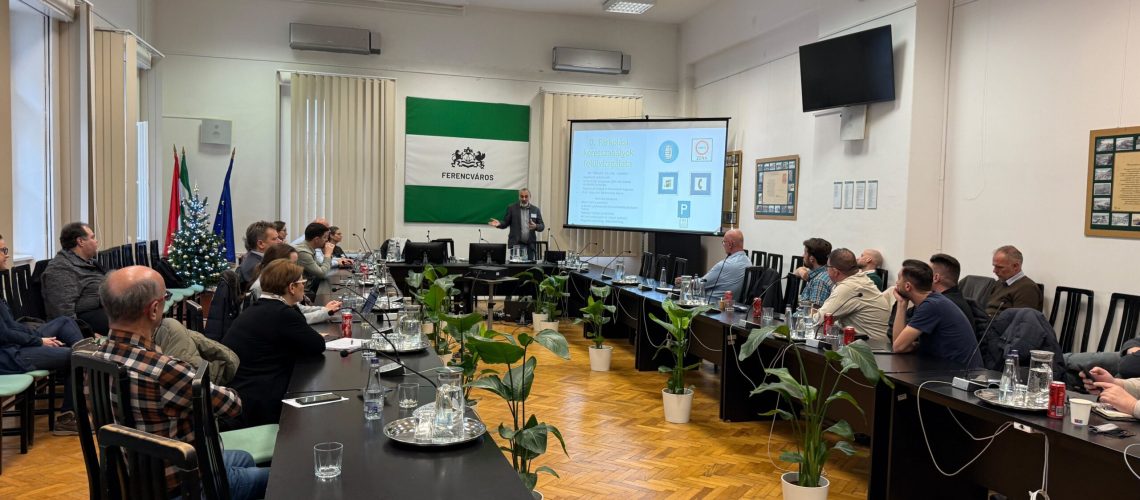

In cooperation with Magyar CIVINET and the Municipality of Ferencváros (9th district of Budapest), Mobilissimus organized a professional event entitled Professional day on the future of urban parking: Challenges, development directions, solutions, which took place on December 10, 2025. The morning program consisted of professional presentations, while the afternoon was devoted to an interactive workshop.
Dr. András Szele, a lead expert at Mobilissimus, opened the event.
The NXTLVL Parking project and the ParkPAD methodology
Rita Petrovácz and Nikolett Csörgő from Mobilissimus presented the Interreg CE NXTLVL Parking project. The presentation covered the structure of the project, the ParkPAD methodology, the parking audits carried out so far, and opportunities for further development. The presentation also touched on the pilots implemented as part of the project, combining “push” (restrictive) and “pull” (incentive) measures.
Renewal of paid parking system in Debrecen
Managing director of DV Parking Kft., András Fodor, then gave a brief presentation on the renewal of paid parking system in Debrecen, which came into effect on August 1, 2025.
According to the current regulations: “The obligation to pay a fee may be imposed on a parking area and period for which the average occupancy rate of spaces suitable for parking vehicles exceeds 70% during the given period.”
In Debrecen, the average utilization rate of the areas to be included was 77%. The reform aimed to create a more transparent and uniform zone system by including new parking spaces (7,166 in total) and modifying the fee structure and discount system. Under the new system, Debrecen residents can park for free after registering, while day tickets and passes are also proving popular. Approximately 70% of parking fees are currently paid via mobile phone.
Parking zones in Debrecen
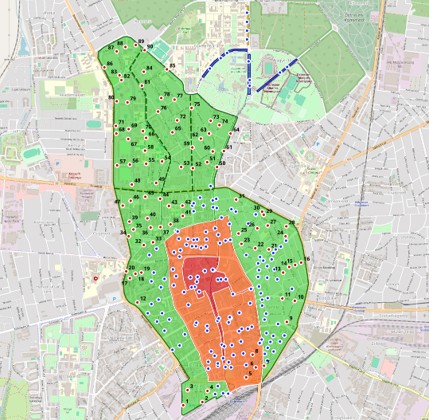
Source: DV Parking
The curbside as a strategic urban resource and the renewal of parking regulations in the capital
Tamás Strang, head of mobility strategy at BKK, talked about the importance of the curbside, with particular reference to the GRETA and LIFE HungAIRy projects. The curbside is one of the city’s most valuable yet underutilized public spaces, the transitional strip between the pavement and the road. Budapest was among the first cities to develop a metropolitan-level curbside concept that treats the entire area uniformly.
The GRETA project aims to make urban mobility more environmentally friendly by developing cargo bike freight transport, micro-consolidation points, and roadside areas, with pilot interventions at several locations. The LIFE HungAIRy project plans to improve the efficiency of inner-city freight transport by introducing consolidation points and mobile and parcel consolidation shuttles. It also involves the development of a loading space reservation system as a new logistics service, implemented in several phases.
In Budapest, the Municipality is responsible for parking regulations, while the district municipalities are responsible for operations. On November 27, 2024 the capital’s parking regulations were amended to extend the parking period, increase fees, restructure discounts, increase the efficiency of parking operations, and update P+R and protected zone regulations.
Grand Boulevard
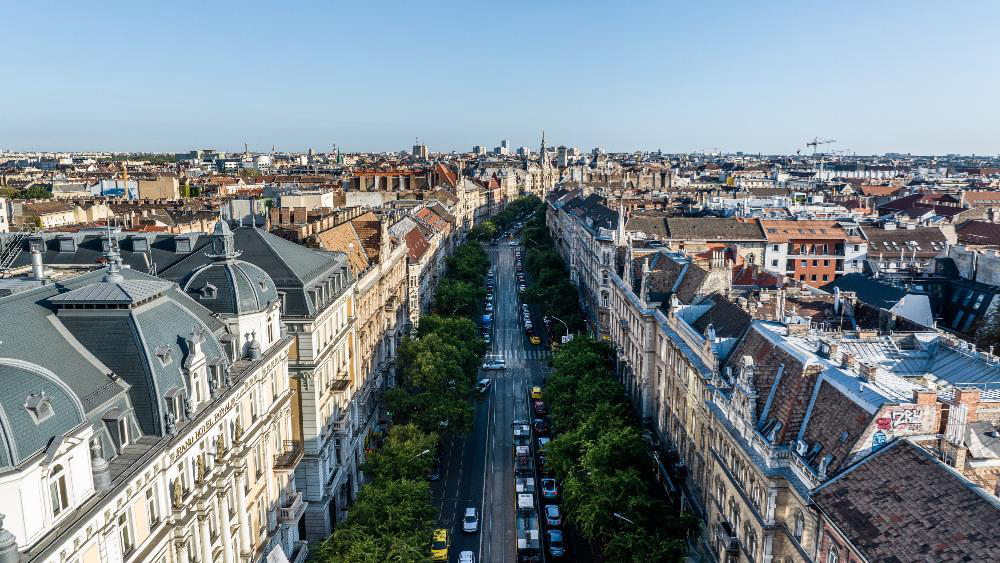
Source: BKK
The Grand Boulevard is being renovated: How the functionally redesigned curbside will serve businesses and apartment buildings along the boulevard
Samu Balogh, urban mobility planner at BKK, and Dr. András Szele gave a joint presentation focusing on how the functionally redesigned curbside will serve the businesses and apartment buildings along the boulevard. Mobilissimus designed the curbside between Boráros Square and Nyugati Square basing their design on extensive surveys and their own methodology. Studies showed that the boulevard is a multi-use urban space where the different mobility needs of residents, businesses, shoppers, and services overlap. The design takes all these factors into account. The new curbside is prepared for the challenges of the future, supporting loading, pedestrian and micro-mobility traffic, community functions and greening. Construction is set to begin in 2028, but much remains to be done at the planning stage.
What do (residential) parking regulations give us?
In his presentation, Dániel Rádai, the Deputy Mayor of Józsefváros (8th district of Budapest), outlined how the district has changed its approach to parking and the use of public spaces. Józsefváros is a large, densely populated district with a variety of functions, and public space developments here are largely inspired by Lucy Saunders’ Healthy Streets concept. The 2019 mayoral programme openly stated that the goal was to replace car traffic with public transport, cycling, and pedestrian, scooter, and wheelchair traffic.
As part of the rationalisation of parking and public spaces, the number of residential permits issued in the Palace District and the Market Hall District was 159% and 147% of the number of parking spaces, respectively. In exchange, the price of residential parking permits was increased and parking spaces were eliminated on certain streets, where more liveable public spaces were created for residents. This process has been accompanied by extensive public consultations, which have led to a noticeable change in attitude in the district.
Where to go next in parking policy?
In his presentation, Dr András Szele outlined the parking policy recommendations developed within the NXTLVL project, which are to be coordinated at a national level. The presentation raised fundamental questions about the future of parking policy, such as why paid parking alone is not suitable for regulating demand, how loading problems can be addressed, and which aspects should be regulated at what level for local governments to implement effective, well-functioning parking policies.
The six main recommendations are:
- Review of parking framework regulations
- Establishment of a National Parking Development Fund
- Development of a national digital parking data framework system
- Training program for urban parking and mobility managers
- Use of uniform, standardized control tools and technologies
- Dedication of parking revenues to the development of liveable cities
József Attila housing estate

Source: Mobilissimus
Afternoon workshop
András Ekés, the managing director of Mobilissimus, led the afternoon workshop, during which he discussed the current situation of urban parking with the participants. Urban parking is generally considered to be both crowded and chaotic, and it often fails to meet the needs of the residents. While parking is mostly organised and residents are satisfied in some districts (e.g. District VIII), most municipalities need to take further measures to ensure more efficient and organised parking. At the same time, society has accepted paid parking, considering it part of urban culture and treating it as a ‘necessary evil’, a perception which was also influenced by the introduction of free parking during the pandemic.
Several shortcomings in effective parking policy currently exist. A framework is needed that local governments can adapt to their local needs, and existing national regulations need to be updated. Effective communication and cooperation are also important between local governments and the state level, as well as between the districts and the municipality of Budapest.
During the workshop, it was mentioned several times that vehicles stored on the roads with unpaid fines, no licence plates or unclear ownership pose a significant problem and incur serious costs for local governments in terms of their removal and storage. Józsefváros is a good example of a solution to this problem, having registered the vehicles in question, fitted them with wheel clamps, and seen the number of illegally parked vehicles decrease significantly over time.
Parking-related issues are primarily dealt with by the deputy mayor and parking operators. There is generally a lack of professional coordination between the two parties (except in Józsefváros), but, according to the participants, this lack of coordination does not cause shortcomings in the implementation of parking policy. Those wo are dealing with parking mainly obtain up-to-date information from professional events, conferences and best practice.
Participants stated that it would be very useful to develop a comprehensive parking training programme and create a national knowledge-sharing platform to facilitate the sharing of experiences and good practices.